Categories
Blog

Why Your Exercise Habit Keeps Failing (And the 10-Minute Fix That Actually Works)

The January 6th Phenomenon

Walk into any gym on January 6th and you’ll witness something fascinating. The parking lot overflows. Every treadmill hums with determination. The weight room buzzes with New Year energy. Return on February 15th and it’s a ghost town. Those same people who swore this would be their year are back to scrolling fitness motivation on Instagram instead of actually moving.

This isn’t about willpower. It’s about building systems that bend instead of breaking when life gets messy. The research from Stanford’s Behavior Design Lab shows that motivation is actually the least reliable factor in habit formation. What works? Starting so small that failure feels impossible, then building compound momentum over months, not weeks.

The Minimum Effective Dose Strategy

Here’s what changed everything for my friend Sarah, a working mom who’d tried every fitness program imaginable. Instead of committing to hour-long workouts five days a week, she started with ten squats every morning while her coffee brewed. That’s it. No gym clothes, no special equipment, no carved-out time blocks.

After three weeks of hitting this tiny target consistently, something shifted. She added five push-ups against the kitchen counter. A month later, a two-minute walk around the block. Six months in, she was strength training twice a week and taking evening walks with her kids. The magic wasn’t in the initial ten squats. It was in proving to herself that she could keep promises to her own body.

The minimum effective dose principle comes from pharmacology, but it applies perfectly to movement. Research published in the Journal of Health Psychology found that people who started with just two minutes of daily activity had an 85% higher success rate at maintaining exercise habits after six months compared to those who started with 30-minute sessions.

Stack It, Don’t Schedule It

Forget the complicated workout schedules. The most successful movement habits piggyback on things you already do automatically. James Clear calls this habit stacking, and the neuroscience backs it up. When you link a new behavior to an established routine, you’re hijacking existing neural pathways instead of trying to build new ones from scratch.

Try this: after I brush my teeth, I do ten calf raises. After I sit down at my desk, I do five shoulder rolls. After I pour my morning coffee, I walk to the mailbox. These micro-movements take advantage of what researchers call implementation intentions, basically pre-deciding when and where you’ll move without relying on motivation in the moment.

The beauty of stacking is that it works with your existing life instead of requiring you to overhaul everything. A study from the University of Southern California found that people who attached new exercise habits to existing routines were 2.3 times more likely to maintain them after 12 weeks compared to those who tried to create entirely new schedules.

Progress Over Perfection (With Actual Examples)

Let’s get specific about what sustainable progress actually looks like. It’s not the dramatic before-and-after photos flooding social media. It’s my neighbor Tom, who went from getting winded walking up his driveway to hiking three-mile trails with his grandkids. It took him 18 months of consistent, unglamorous movement.

Week one through four: ten-minute walks after dinner, three times a week. Week five through twelve: same walks, but added gentle hills in his neighborhood. Months four through six: introduced bodyweight exercises twice a week, started with modified push-ups against his car. Month seven through twelve: joined a beginner hiking group that met every other Saturday. Month thirteen through eighteen: built up to longer trails and added simple strength work with resistance bands.

Notice what didn’t happen. No dramatic overhauls. No expensive equipment purchases. No all-or-nothing mentality. Just consistent, incremental increases that respected his current fitness level and gradually expanded his capacity. Research from the American College of Sports Medicine confirms that gradual progression reduces injury risk by 40% while improving long-term adherence rates.

The Recovery Reality Check

Here’s where most movement habits crash and burn: ignoring recovery. You start strong, push through soreness, pride yourself on never missing a day, then suddenly everything hurts and motivation evaporates. Sustainable movement requires building recovery into your system from day one, not treating it as an afterthought.

Active recovery looks different for everyone. For some, it’s gentle yoga or stretching. For others, it’s a leisurely walk or easy bike ride. The key is movement that feels restorative rather than depleting. Sleep researcher Dr. Matthew Walker’s data shows that people who prioritize seven to eight hours of quality sleep have 23% better exercise consistency and 31% lower injury rates compared to chronic under-sleepers.

Build recovery markers into your routine. If your legs feel heavy for two days straight, take an easy day. If you’re dreading your movement session instead of looking forward to it, scale back. Your body adapts during rest, not just during activity. Studies from the European Journal of Applied Physiology show that planned recovery weeks every fourth week actually accelerate fitness gains compared to non-stop training.

The Long Game Mindset

Think about someone you know who’s naturally active in their seventies or eighties. They didn’t get there through extreme fitness phases or punishing workout regimens. They built movement into their life so naturally that stopping would feel strange. This is your north star: becoming someone for whom movement is as natural as brushing teeth.

The compound interest of movement works quietly but powerfully. Today’s ten-minute walk doesn’t just burn calories. It improves your cardiovascular system, strengthens bones, enhances mood regulation, and builds confidence for tomorrow’s movement. A longitudinal study following adults for 25 years found that those who maintained consistent, moderate activity had significantly better physical and cognitive function in their later decades compared to both sedentary individuals and those who exercised intensely but inconsistently.

What small movement could you commit to for the next seven days? Not the workout you think you should do, but the one that feels almost too easy to skip. Your future self is counting on you to start there.
Categories
Blog

Your Brain Keeps Receipts: Why Sleep Debt Shows Up in Tomorrow’s Workout

When Your Body Keeps Score

You know that feeling when you’re doing everything right but your body feels like it’s betraying you? You hit your macros, crushed yesterday’s workout, drank enough water to float a small boat. But here you are, staring at the barbell like it personally offended your ancestors. Your heart rate spikes during what should be an easy warm-up. Your coordination is off. Even your mood feels fragile, like someone might make you cry by asking if you want coffee.

Here’s what’s probably happening: your brain has been keeping receipts on every night you’ve shortchanged your sleep, and now it’s presenting you with the bill. Sleep debt doesn’t just vanish because you feel fine the next morning after staying up until 2 AM scrolling. Your nervous system remembers everything, and it’s going to collect with interest.

The Recovery Equation Your Fitness Tracker Can’t Measure

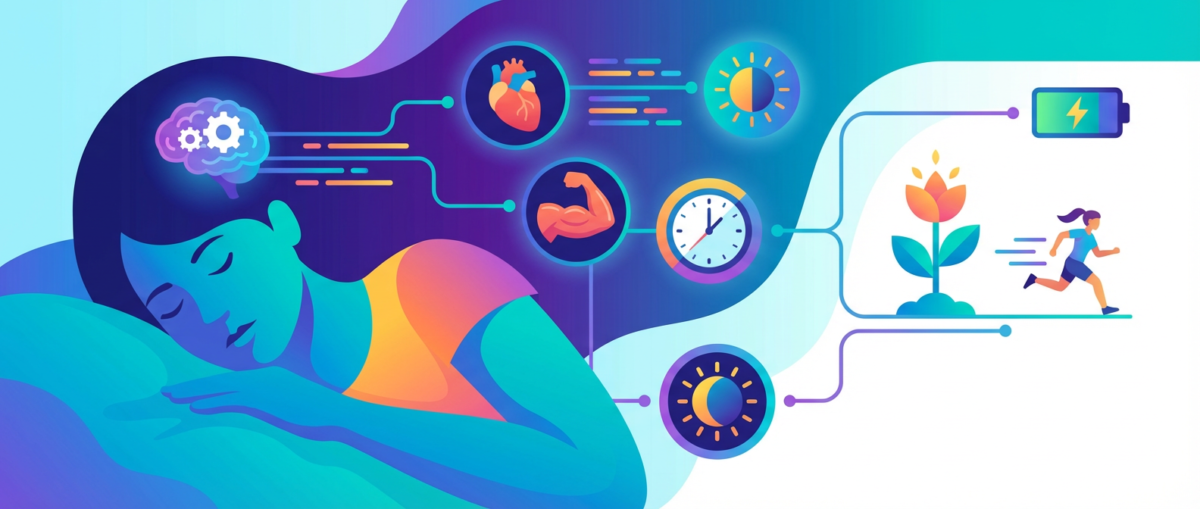
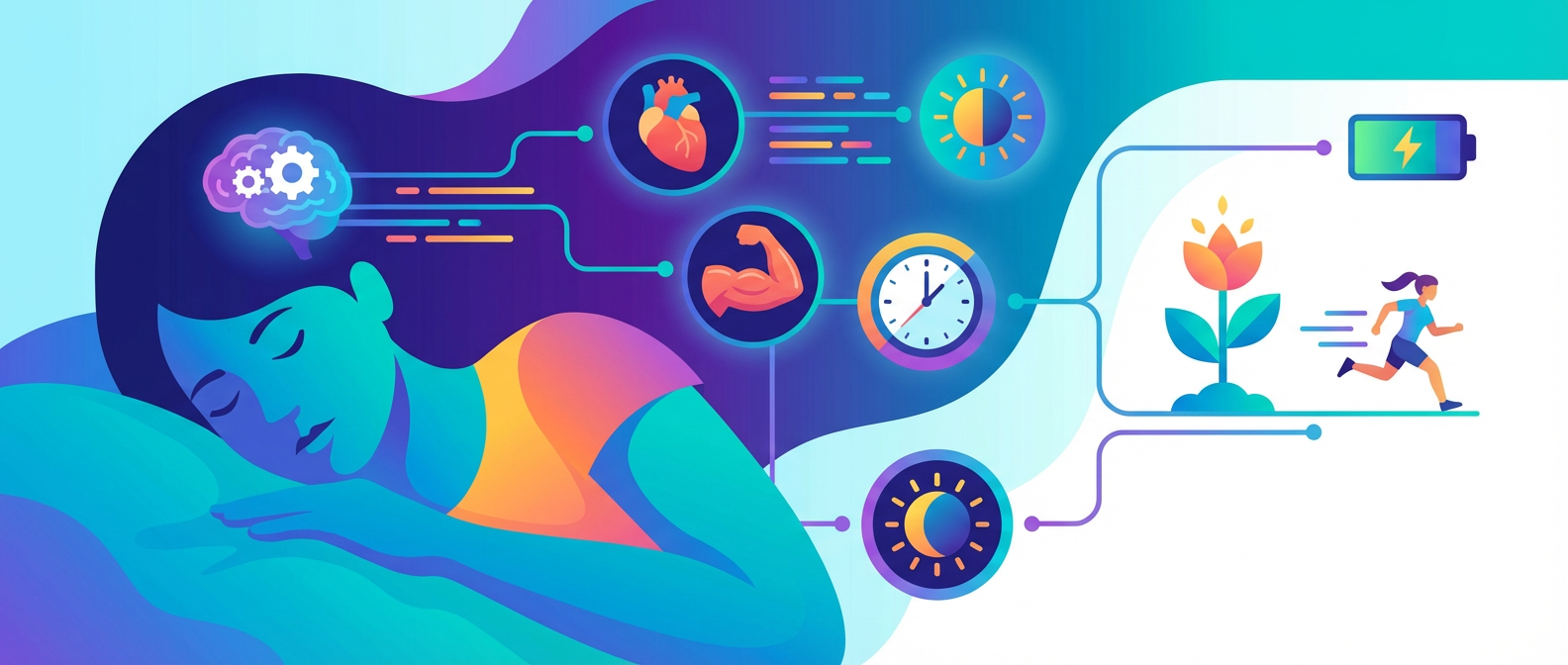
Most people think recovery happens in their muscles. The real magic happens in your brain during deep sleep phases, particularly during the first few hours of the night. This is when your glymphatic system kicks into high gear, essentially power-washing your neural pathways and clearing out metabolic waste that built up during the day. Think of it as your brain’s overnight cleaning crew, except they don’t just empty the trash bins. They’re rebuilding cellular structures, locking in motor learning from your training, and regulating the hormones that determine whether tomorrow feels possible or punishing.

A 2018 study from UC Berkeley found that just one night of sleep loss decreased participants’ pain tolerance by 15% and altered their brain’s pain-processing regions. Translation? That weight that felt manageable yesterday might genuinely feel heavier today, not because you’re weak, but because your nervous system is operating from a deficit.

Your mental load directly impacts your physical capacity. When you’re running on insufficient sleep, your prefrontal cortex struggles with decision-making and impulse control. This shows up as that voice in your head that says “just skip the workout” or convinces you that form doesn’t matter when you’re tired. Your brain is trying to protect you from making poor decisions under stress, but it can’t tell the difference between the stress of sleep loss and the beneficial stress of exercise.

The 90-Minute Rule That Changes Everything

Here’s something that might shift how you think about bedtime: your sleep cycles run in roughly 90-minute chunks, moving through light sleep, deep sleep, and REM sleep before starting over. Most adults need 4-6 complete cycles per night, which translates to 6-9 hours total. But here’s the key insight that changed my own sleep game: waking up in the middle of deep sleep will leave you feeling worse than getting slightly less total sleep but completing a full cycle.

Instead of fixating on hitting exactly 8 hours, try working backward from your wake-up time in 90-minute increments. If you need to be up at 6 AM, aim to be asleep by 10:30 PM (7.5 hours) rather than 11 PM (7 hours). That extra 30 minutes might mean the difference between waking up mid-cycle feeling groggy versus completing a cycle and feeling alert.

Track this for a week. Note not just how many hours you slept, but how you feel during your workout the next day. Most people discover they have a sweet spot where they feel significantly more resilient, both physically and mentally, even if the total sleep time isn’t what they expected.

Creating Your Personal Sleep Sanctuary

Your sleep environment sends signals to your nervous system about whether it’s safe to let go and recover. This isn’t about having the perfect bedroom setup from a magazine. This is about removing obstacles that keep your brain on alert when it should be shifting into repair mode.

Temperature matters more than most people realize. Your core body temperature naturally drops as you fall asleep, which is why a room around 65-68°F often feels optimal. But individual variation is huge here. Some people sleep better slightly warmer, others need it cooler. Pay attention to whether you wake up feeling hot or cold, and adjust accordingly. Your body will tell you what it needs.

Light exposure is your circadian rhythm’s primary cue. Blue light from screens suppresses melatonin production, but the solution isn’t necessarily avoiding all screens after sunset. Instead, consider blue light blocking glasses in the evening, or use your phone’s night mode earlier in the day. The goal is giving your brain clear signals about when it’s time to start winding down versus staying alert.

When Sleep Feels Impossible: Working With Your Mental Load

Sometimes the barrier to good sleep isn’t your environment or your schedule. It’s your brain refusing to turn off because there’s too much left undone, unprocessed, or unresolved. This is where the mind-body connection becomes impossible to ignore. Your physical recovery depends on your mental ability to let go, even temporarily.

Try a “brain dump” 30 minutes before you want to fall asleep. Grab a notebook and write down everything circulating in your mind: tomorrow’s to-do list, conversations you need to have, problems you’re trying to solve. The goal isn’t to solve anything right now. It’s to get the mental load out of your head so your brain doesn’t have to keep holding onto it all night.

Progressive muscle relaxation works because it gives your anxious mind a specific task while simultaneously releasing physical tension. Start with your toes and work your way up, tensing each muscle group for 5 seconds, then releasing. By the time you reach your shoulders and neck, you’ve given your brain something to focus on besides the mental loop of worries, and you’ve signaled to your nervous system that it’s time to shift gears.

Your sleep quality directly impacts your capacity to handle stress, make good decisions, and show up for your goals tomorrow. It’s not just about feeling rested. It’s about giving your mind and body what they need to support the life you’re trying to build. What would change if you started treating sleep as seriously as you treat your training? What might become possible if you stopped fighting your recovery and started designing for it instead?

Categories
Blog

The Sleep Recovery Numbers That Actually Matter (And Why 8 Hours Isn’t Magic)

Why Your Sleep Tracker Is Lying About Recovery

Your fitness tracker says you got 7 hours and 42 minutes of sleep last night, with 23% deep sleep and a “recovery score” of 78. But here’s what those numbers don’t tell you: recovery isn’t just about duration, and that 23% deep sleep might actually be fantastic depending on your age and individual sleep architecture.

The Sleep Recovery Numbers That Actually Matter (And Why 8 Hours Isn't Magic)
The Sleep Recovery Numbers That Actually Matter (And Why 8 Hours Isn’t Magic)

Research shows sleep quality beats quantity when it comes to physical recovery. A 2019 study in the Journal of Sleep Research found that athletes with just 6 hours of high-efficiency sleep (85% or higher time actually asleep) showed better next-day performance than those with 8 hours of fragmented sleep. The real metric isn’t your total time in bed. It’s your sleep efficiency percentage.

Calculate your sleep efficiency by dividing actual sleep time by time spent in bed, then multiply by 100. Anything above 85% puts you in the top quartile for recovery potential. Below 75%? You’ll see measurable drops in muscle protein synthesis and hormone recovery. The difference between 75% and 85% efficiency translates to roughly 15-20% better recovery outcomes across multiple biomarkers.

Illustration for The Sleep Recovery Numbers That Actually Matter (And Why 8 Hours Isn't Magic)
Illustration for The Sleep Recovery Numbers That Actually Matter (And Why 8 Hours Isn’t Magic)

The Deep Sleep Sweet Spot Nobody Talks About

Everyone obsesses over deep sleep percentages, but the actual numbers might surprise you. Adults typically spend 15-20% of total sleep time in deep sleep, and that percentage naturally decreases with age. If you’re over 40 and hitting 15%, you’re doing better than 60% of your age group.

More isn’t always better here. A 2020 study tracking 1,200 adults found that people with 25%+ deep sleep actually reported more morning grogginess and slower cognitive performance than those in the 18-22% range. Your brain needs the full sleep cycle symphony, not just the deep sleep solo. REM handles emotional processing and skill consolidation, while light sleep stages facilitate the transitions that make everything work.

The magic happens in sleep cycle completion. Each complete cycle lasts 90-110 minutes, and you need 4-6 complete cycles per night. That’s why some people feel amazing on 6 hours (4 complete cycles) but terrible on 7.5 hours (5 incomplete cycles). Track your cycles, not just your phases.

Temperature, Timing, and the Recovery Multiplication Effect

Your core body temperature drops 1-2 degrees Celsius during sleep. This isn’t just a side effect, it’s a requirement for optimal recovery. Research from the University of Texas found that people who maintained bedroom temperatures between 60-67°F showed 23% higher growth hormone release during sleep compared to those sleeping in 70°F+ environments.

The timing of this temperature drop matters enormously. Your body starts cooling 1-2 hours before your natural bedtime, which is why hot showers or baths 90 minutes before bed can actually improve sleep onset. The rapid cooling after you get out mimics and accelerates your natural temperature rhythm. Studies show this can reduce sleep onset time by an average of 10 minutes and increase deep sleep by 10-15%.

Light exposure timing creates a multiplication effect with temperature regulation. Getting 10-15 minutes of bright light within one hour of waking advances your circadian rhythm and strengthens the evening temperature drop. People who do this consistently show 40% faster sleep onset and 25% more stable sleep architecture compared to those who skip morning light exposure.

The Protein Synthesis Window You’re Probably Missing

Here’s where sleep optimization gets really interesting for recovery. Your body’s muscle protein synthesis rate doubles during the first 3-4 hours of sleep, but only if specific conditions are met. You need adequate glycogen stores, optimal core temperature, and uninterrupted sleep cycles during this window.

A fascinating 2021 study found that people who consumed 20-25 grams of casein protein 30-60 minutes before bed showed 22% higher overnight muscle protein synthesis rates. But here’s the catch: this only worked when sleep efficiency was above 80%. Poor sleep quality completely negated the protein timing benefit. Recovery isn’t just about what you do before bed, it’s about optimizing the entire sleep environment for protein synthesis.

Growth hormone release follows a predictable pattern: 70% occurs during the first deep sleep period of the night, typically 60-90 minutes after sleep onset. Alcohol, late meals, and screen exposure can delay or reduce this critical release by 15-35%. The difference between optimal and suboptimal growth hormone release translates to measurably different recovery rates over time.

Building Your Personal Sleep Recovery Protocol

Start with the fundamentals that move the biggest numbers. Consistent sleep and wake times create the foundation for everything else to work. Even weekend variations of more than one hour can reduce weekly sleep efficiency by 5-10%. That might not sound like much, but over months it adds up to significantly slower recovery and adaptation.

Track your personal sleep efficiency for two weeks before making any changes. Most people are shocked to discover their efficiency is 15-20 percentage points lower than they assumed. Use this baseline to measure the impact of each change you make. Room temperature adjustments typically show results within 3-5 days. Light timing changes take 7-14 days to show full effects.

The goal isn’t perfection, it’s consistency in the variables that matter most for your recovery. Focus on sleep efficiency first, temperature optimization second, and protein timing third. Each builds on the others to create compounding recovery benefits that show up in your training, energy levels, and overall health markers.

What’s your current sleep efficiency percentage? Try calculating it for a week and share what you discover. Sometimes the most powerful changes start with simply measuring what’s actually happening rather than what we think is happening.

Categories
Blog

When Your Brain Fog Clears at 3 PM: Why Meal Timing Is Actually Mind Management

The Hidden Mental Load of Fighting Your Body’s Clock

You know that feeling when you’re trying to focus on an important task, but your brain feels like it’s swimming through molasses? Or when decision fatigue hits so hard that choosing what to have for lunch feels like solving calculus? Here’s something most wellness advice misses: your cognitive function is tied to when and what you eat, and ignoring this connection is like trying to drive with the parking brake on.

When Your Brain Fog Clears at 3 PM: Why Meal Timing Is Actually Mind Management

Your brain burns through about 20% of your daily calories, even though it’s only 2% of your body weight. That’s one expensive organ to run. It needs steady, quality fuel to work right. When we treat meals as afterthoughts or eat junk food whenever, we’re asking our minds to handle complex tasks while running on empty.

The mental load of modern life is exhausting. Between work demands, family responsibilities, and the general chaos of existing in 2024, our brains are already working overtime. Why make it worse by creating internal chaos with random eating patterns and blood sugar roller coasters?

Your Circadian Rhythm Isn’t Just About Sleep

Research from Harvard’s Department of Neurobiology shows that our circadian clocks don’t just control sleep. They control hormones, neurotransmitters, and metabolic processes that directly affect mood, focus, and mental resilience. When you eat matters because your digestive system, insulin sensitivity, and your ability to make feel-good neurotransmitters like serotonin all follow predictable daily rhythms.

Studies show that people who eat their largest meals earlier in the day report better mood stability and cognitive performance. This isn’t about restriction or complicated rules. It’s about working with your body’s natural patterns instead of fighting them. Your insulin sensitivity is highest in the morning and gradually drops throughout the day. This means your body is designed to handle larger, more complex meals earlier and lighter stuff as evening approaches.

Think about it: how many times have you felt mentally sharp and emotionally balanced after a heavy late dinner? I can’t remember a single one. Your body diverts serious energy to digestion when you eat big meals close to bedtime, energy that could support quality sleep and next-day mental clarity instead.

The Nutrient Density Connection Your Therapist Probably Doesn’t Know About

Here’s where it gets really interesting. Your brain makes neurotransmitters from the raw materials you provide through food. Serotonin production requires tryptophan, B vitamins, and magnesium. Dopamine needs tyrosine, iron, and folate. When we consistently choose nutrient-poor foods, we’re limiting our brain’s ability to regulate mood and motivation.

A 2019 study published in Nutritional Neuroscience found that participants who increased their intake of nutrient-dense foods showed improvements in anxiety and depression scores within just four weeks. We’re not talking about expensive superfoods here. We’re talking about choosing an apple with almond butter over a granola bar, or having eggs with spinach instead of cereal for breakfast.

The thing about nutrient density is that it builds on itself. When you consistently fuel your body with foods rich in vitamins, minerals, healthy fats, and quality protein, you create a foundation for mental resilience. Your blood sugar stays stable, your energy doesn’t crash, and your capacity to handle stress naturally improves.

This doesn’t mean perfect eating or never enjoying treats. It means recognizing that food is information, and the information you send your brain through your choices directly affects how you feel and function throughout the day.

Practical Strategies That Actually Work in Real Life

Let’s get practical. You don’t need to overhaul your entire life overnight. Start with one meal timing shift that feels manageable. Maybe that’s eating breakfast within two hours of waking up instead of running on coffee until noon. Or perhaps it’s moving your largest meal to lunchtime and keeping dinner lighter.

For nutrient density, focus on adding before subtracting. Add a handful of berries to your yogurt. Include a palm-sized portion of protein at each meal. Throw some leafy greens into your smoothie or sandwich. These small changes create ripple effects that extend far beyond physical health.

Pay attention to your energy and mood patterns. When do you feel most focused? When does your mood typically tank? Track this for a week alongside your eating patterns. You might discover that your 3 PM brain fog connects to skipping lunch, or that your evening anxiety spikes after eating processed foods earlier in the day.

Remember, this is about working with your unique body and schedule, not copying someone else’s perfect day. A nurse working night shifts will have different optimal timing than someone with a standard office job. The key is consistency within whatever pattern works for your life.

Your Mental Health Deserves This Kind of Attention

We’ve been taught to think of mental health and physical health as separate things, but they’re completely connected. The same inflammation that affects your joints can mess with your mood. The same blood sugar chaos that makes you physically tired can trigger anxiety or irritability.

Taking care of your mental health through mindful eating isn’t selfish or superficial. It’s basic maintenance. When your brain has the fuel it needs to work right, everything else becomes more manageable. You have more patience with difficult people. You make better decisions under stress. You feel more like yourself.

This approach acknowledges that you’re a whole person, not just a collection of symptoms to manage separately. Your mind and body are partners in this life, and they both deserve thoughtful, consistent care.

Start small, be patient with yourself, and notice what changes when you begin treating meal timing and food quality as essential parts of your mental wellness toolkit. Your future self will thank you for every nutrient-dense meal and every choice that honors your body’s natural rhythms.

Categories
Blog

Why Your 3PM Energy Crash Might Be About More Than Just Timing

The Inconvenient Truth About When You Eat

Your coworker swears by intermittent fasting. Your neighbor eats six small meals a day. Your trainer insists on post-workout protein within 30 minutes. Meanwhile, you’re wondering if any of this actually matters or if everyone’s just making it up as they go along.

Here’s what the research actually tells us: meal timing affects your energy, but not in the dramatic ways the internet wants you to believe. The bigger story? What you eat matters far more than when you eat it. But timing isn’t irrelevant either.

Your Body’s Internal Food Clock

Your circadian rhythm doesn’t just control sleep. It also controls when your body expects food and how efficiently it processes different nutrients throughout the day. Insulin sensitivity peaks in the morning and gradually declines. That’s why that 9 PM bowl of pasta might leave you feeling sluggish the next morning while the same meal at noon energizes you.

A 2020 study in the Journal of Clinical Medicine tracked 116 adults for 12 weeks. People who ate their largest meal before 3 PM lost 25% more weight than those who ate it later, even when total calories were identical. But before you start setting dinner alarms, consider this: the early eaters also went to bed earlier and had more consistent sleep schedules.

The takeaway isn’t that late dinners are evil. Your body performs better when you align eating patterns with natural rhythms. This might mean having your most carb-heavy meal when insulin sensitivity is highest. Or spacing protein throughout the day when muscle synthesis is most active.

Nutrient Density: The Real Game Changer

While you’re debating whether to eat breakfast at 7 AM or 10 AM, you might be missing the bigger picture. A 2019 analysis of 43 studies found that nutrient density predicted energy levels, mood stability, and long-term health outcomes far better than meal timing alone.

Consider two scenarios: a 400-calorie breakfast of steel-cut oats with berries, nuts, and Greek yogurt versus 400 calories of a breakfast pastry. The oats provide fiber, protein, healthy fats, antioxidants, and B vitamins. The pastry? Sugar, refined flour, and not much else. Your blood sugar, hunger levels, and energy at 11 AM will be completely different.

This is where the research gets interesting. A study from Harvard’s School of Public Health followed 120,000 people for 16 years. Those who prioritized nutrient-dense foods had lower rates of weight gain, diabetes, and cardiovascular disease regardless of their eating schedule. The nutrient-dense group included people who ate three meals, six small meals, and everything in between.

The Protein Timing Myth That’s Actually Half True

You’ve probably heard about the “anabolic window” – the idea that you must consume protein within 30 minutes of working out or your muscles will waste away. The research on this is more complex than fitness influencers suggest.

A 2017 meta-analysis of 23 studies found that total daily protein intake mattered far more than timing for muscle growth and recovery. However, there’s a catch. Spreading protein evenly throughout the day does appear to optimize muscle protein synthesis better than cramming it all into one or two meals.

The sweet spot seems to be 20-30 grams of high-quality protein every 3-4 hours. This isn’t because your muscles have a strict schedule. Your body can only process so much protein at once for muscle building. A 2016 study showed that eating 40 grams of protein in one sitting wasn’t twice as effective as eating 20 grams. The extra just got used for energy or stored as fat.

Making This Work in Real Life

The research is clear, but your life is complicated. You have meetings, commutes, kids, and a million other things that don’t care about optimal nutrient timing. That’s okay. The goal isn’t perfection – it’s progress.

Start with nutrient density. Focus on foods that pack multiple nutrients per calorie: eggs instead of cereal, berries instead of juice, sweet potatoes instead of white bread. Once that feels automatic, experiment with timing. Maybe that means eating your biggest meal earlier in the day. Or maybe it means spreading your protein more evenly.

One practical approach that works for many people: aim for a palm-sized portion of protein, a fist-sized portion of vegetables, a cupped-hand portion of carbs, and a thumb-sized portion of healthy fats at each meal. This naturally creates nutrient-dense meals without requiring a nutrition degree to implement.

The most sustainable approach might not be the most optimal one, and that’s perfectly fine. Consistency with a good plan beats perfection with an impossible one every single time. What small change could you make this week that would improve either your meal timing or nutrient density without turning your life upside down?

Categories
Blog

The Science of Sticky Movement Habits: Why Your Exercise Routine Keeps Failing (And How to Fix It)

The Habit Formation Research That Changes Everything

Here’s what the research actually tells us about building lasting movement habits: it’s not about willpower, and it’s definitely not about going from zero to CrossFit champion in three weeks. A 2009 study by Phillippa Lally at University College London tracked 96 people forming new habits and found the average time to reach automaticity was 66 days. But here’s the kicker that most fitness advice ignores: the range was anywhere from 18 to 254 days depending on the complexity of the behavior.

The Science of Sticky Movement Habits: Why Your Exercise Routine Keeps Failing (And How to Fix It)

This variability isn’t a bug in human psychology. It’s a feature. Your brain is designed to automate behaviors gradually, and movement habits follow predictable neural pathways. When you repeat a physical activity in a consistent context, your basal ganglia literally rewire to make that movement feel more automatic and require less conscious decision-making. The MIT studies on habit loops show this process involves a neurological pattern they call the “habit loop”: cue, routine, reward.

What this means for you: stop beating yourself up for not immediately loving your morning jogs. Your brain needs time to build those neural highways. The research suggests focusing on consistency over intensity during the first 60-90 days gives you the highest probability of long-term success.

Illustration for The Science of Sticky Movement Habits: Why Your Exercise Routine Keeps Failing (And How to Fix It)

Why Most Movement Programs Fail: The Complexity Trap

The fitness industry has a dirty secret: complex programs sell better than simple ones, but simple programs work better than complex ones. A 2019 systematic review in the Journal of Health Psychology analyzed adherence rates across different exercise interventions and found an inverse relationship between program complexity and long-term compliance. Programs with more than three new variables (time, intensity, type of exercise, location) showed significantly higher dropout rates after 12 weeks.

Your brain can only handle so much change at once. When you try to overhaul your entire movement routine simultaneously, you’re essentially asking your prefrontal cortex to juggle multiple new behaviors while it’s already managing your regular daily decisions. Neuroscientist Ann Graybiel’s research at MIT shows that habit formation works best when you change one variable at a time, allowing each new behavior to move from conscious control to automatic processing before adding complexity.

This is why the person who starts with a 10-minute daily walk often outlasts the one who jumps into hour-long gym sessions. The walker is building a foundation of automaticity. The gym-goer is fighting their brain’s natural resistance to multiple simultaneous changes. I see this pattern constantly, and frankly, it’s a bit frustrating how the industry keeps pushing these elaborate programs when we know simpler approaches work better.

The Environmental Design Secret That Doubles Success Rates

Environmental psychology research reveals something most people miss: your physical environment has more influence over your movement habits than your motivation levels. Stanford’s Persuasive Technology Lab found that environmental design changes can increase exercise adherence by up to 87% compared to motivation-based interventions alone.

The most powerful environmental cue is what researchers call “implementation intentions”, which is basically pre-deciding when and where your movement will happen. But it goes deeper than just scheduling. Studies show that visual cues in your environment trigger automatic behaviors. Keep your workout clothes visible. Put your walking shoes by the door. Make the stairs more appealing than the elevator by ensuring they’re well-lit and clean.

One particularly elegant study from the University of Pennsylvania showed that people who moved their TVs from their bedrooms to living rooms increased their daily step counts by an average of 1,200 steps. They weren’t trying to walk more. They just removed an environmental cue that encouraged sedentary behavior. Your environment is constantly voting for or against your movement goals, whether you realize it or not.

The Minimum Effective Dose for Sustainable Change

Here’s where the research gets really interesting. The idea that you need intense workouts to see benefits isn’t supported by the literature on habit formation or health outcomes. A 2018 meta-analysis in the British Medical Journal found that people who moved from completely sedentary to just 75 minutes of moderate activity per week saw 80% of the health benefits achieved by those doing 300+ minutes weekly.

For habit formation specifically, the sweet spot appears to be what researchers call “minimum viable consistency.” Studies consistently show that doing something small every day beats doing something big three times per week when measuring automaticity after six months. Your brain craves predictable patterns, not heroic efforts. I know this might sound counterintuitive if you’ve been conditioned to believe “no pain, no gain,” but the data is pretty clear on this.

This doesn’t mean you can’t progress or increase intensity. It means you should establish the behavior pattern first, then gradually increase the challenge. Start with movements that feel almost ridiculously easy. If you’re thinking “this is too simple,” you’re probably in the right zone for sustainable habit formation.

Building Your Personal Movement Protocol

The research gives us a clear framework for designing movement habits that stick. First, choose one type of movement and one consistent time. The specificity matters more than you think. “I’ll exercise more” fails because it’s too vague for your brain to automate. “I’ll walk around my block at 7 AM” works because it provides clear neurological cues.

Second, link your new movement habit to an existing routine. Charles Duhigg’s research on habit stacking shows that anchoring new behaviors to established ones dramatically improves adherence. After you pour your morning coffee, you put on your walking shoes. After you brush your teeth at night, you do five minutes of stretching. The existing habit becomes the cue for the new one.

Third, track your consistency, not your performance. Harvard Business School research shows that tracking behavioral frequency (did you do it?) is more effective for habit formation than tracking performance metrics (how well did you do it?). A simple calendar with X marks for completed days provides the visual feedback your brain needs to recognize the emerging pattern.

The beautiful thing about understanding the science behind sustainable movement habits is that it removes the guesswork and self-blame from the equation. Your struggles with consistency aren’t character flaws, they’re predictable challenges that researchers have mapped extensively. What questions do you have about applying these principles to your own movement goals?

Categories
Blog

Why Your Brain Needs Better Fuel Too: The Hidden Mental Side of Performance Nutrition

Your Mind Is Part of Your Performance Engine

Here’s something wild that happened in my kitchen last week. I was meal prepping for a big training block, obsessing over macros and timing, when I realized I’d completely forgotten to eat lunch. Again. My hands were literally shaking as I portioned out perfectly balanced post-workout meals while my own brain was running on fumes and spite.

Why Your Brain Needs Better Fuel Too: The Hidden Mental Side of Performance Nutrition

This is the paradox so many active people live in. We treat our bodies like high-performance machines, calculating protein timing down to the minute, but we completely ignore the fact that our brains are doing the heavy lifting too. All that decision fatigue from choosing what to eat. The mental energy it takes to stick to nutrition goals when life gets messy. The emotional bandwidth required to bounce back from a rough training session.

Your brain burns about 20% of your daily calories, and when you’re active, that number goes even higher. Yet most performance nutrition advice treats mental energy like it doesn’t matter. A 2019 study in the Journal of Sports Sciences found that cognitive fatigue can tank physical performance by up to 15%. That’s the difference between crushing your goals and wondering why everything feels so much harder than it should.

Illustration for Why Your Brain Needs Better Fuel Too: The Hidden Mental Side of Performance Nutrition

The Real Cost of Mental Fuel Depletion

Let’s talk about what actually happens when your brain runs low on quality fuel. It’s not just about feeling foggy during your morning meeting. Your prefrontal cortex, the part responsible for decision-making and impulse control, basically starts glitching when blood glucose dips. This is why you can nail your nutrition all week, then find yourself face-deep in a bag of chips after one stressful day.

I see this pattern constantly with the athletes and active people I work with. They’ll have their pre and post-workout nutrition dialed in, but they’re making food decisions from a place of complete depletion the other 22 hours of the day. Research from Stanford shows that glucose availability directly impacts willpower and self-regulation. When your brain is under-fueled, every single nutrition choice becomes exponentially harder.

The mental load extends way beyond just food choices too. Planning meals, grocery shopping, prep work, cleaning up. Each decision chips away at your cognitive resources a little more. A study published in Appetite found that people make over 200 food-related decisions daily. No wonder you feel exhausted by dinner time, even on rest days.

Brain-First Nutrition Strategies That Actually Work

Here’s where we flip the script. Instead of treating brain health as separate from performance nutrition, we make it the foundation. Start with stable blood glucose as your non-negotiable. This doesn’t mean avoiding carbs or going keto unless that genuinely works for your body. It means timing your fuel strategically throughout the day.

Pair complex carbohydrates with protein and healthy fats at each meal. Think steel-cut oats with Greek yogurt and berries, not just a banana before your workout. The fiber and protein slow glucose absorption, giving your brain steady fuel instead of the spike-and-crash cycle that leaves you grabbing whatever’s convenient when your blood sugar plummets.

Omega-3 fatty acids deserve special attention here. A meta-analysis of 26 studies found that EPA and DHA supplementation significantly improved cognitive function, particularly working memory and processing speed. Aim for fatty fish twice weekly, or consider a high-quality fish oil if that’s not realistic. Your brain’s cell membranes are literally made of these fats.

Magnesium is another game-changer that most people completely overlook. This mineral is involved in over 300 enzymatic reactions, including the ones that regulate neurotransmitter function. Active people need even more because of losses through sweat. Dark leafy greens, pumpkin seeds, and dark chocolate are excellent sources. The research shows that even mild magnesium deficiency can ramp up anxiety and mess with sleep quality.

Reducing the Mental Load Through Systems

The best nutrition plan in the world won’t work if it exhausts you mentally before you even start. This is where smart systems literally save your sanity. Batch cooking isn’t just about meal prep. It’s about removing 15 small decisions from your Tuesday when you’re already running on empty.

Build flexible frameworks instead of rigid rules. Maybe your framework is: protein + vegetables + healthy fat at every meal. Or: eat something within two hours of waking up, no matter what. These boundaries give you structure without the mental overhead of tracking every macro.

Automate what you can. Subscribe to staple groceries. Keep emergency snacks that combine protein and complex carbs in your car, gym bag, and office. When decision fatigue hits, you want good options to be the easy options.

Think about the timing of your most challenging nutrition goals too. If you’re trying to increase vegetable intake, don’t make that change during your most stressful training block. Our brains can only handle so much change at once. Research on habit formation shows that stacking new behaviors onto existing routines dramatically improves success rates.

The Integration That Changes Everything

Here’s what I’ve learned from years of working with people who’ve cracked the code on sustainable performance nutrition. They stopped treating their minds and bodies as separate systems competing for resources. Instead, they figured out that mental energy and physical energy come from the same well.

When you fuel your brain consistently throughout the day, your workouts feel more manageable. When you reduce the mental load around food choices, you have more bandwidth for recovery and sleep hygiene. When you address stress and emotional eating patterns, your body composition goals become more achievable without the constant internal struggle.

This integration shows up in unexpected ways. Maybe you notice that your afternoon training sessions feel stronger when you’ve had a protein-rich lunch, not because of the physical fuel, but because your brain was calm and focused instead of sending hunger signals all afternoon. Or you realize that meal prepping on Sundays isn’t just about convenience, it’s about preserving your decision-making energy for the things that matter most to you.

The most sustainable approach to performance nutrition isn’t about perfection or willpower. It’s about creating conditions where good choices feel natural and manageable, where your brain and body are working together instead of against each other. What’s one small change you could make this week that would reduce your mental load around food? Start there, and let me know how it goes.