Categories
Blog

Your Energy Isn’t Broken—It Just Needs Better Management

The Real Story About Energy Crashes

Let me start with something that might surprise you: feeling tired at 3 PM doesn’t mean you’re doing life wrong. Your energy naturally dips in the afternoon because of your circadian rhythm, the same biological clock that’s been keeping humans alive for thousands of years. A 2013 study in the journal Sleep Medicine found that alertness drops significantly between 1-4 PM, regardless of whether you’ve eaten lunch or had coffee.

Your Energy Isn't Broken—It Just Needs Better Management
Your Energy Isn’t Broken—It Just Needs Better Management

The difference between people who crash hard and those who coast through? They work with their biology instead of against it. Think of energy management like compound interest for your body. Small, consistent choices add up to big differences over months and years, while quick fixes leave you right back where you started.

Your great-grandmother probably didn’t know about adenosine triphosphate or cortisol curves, but she understood something we’ve forgotten: energy isn’t unlimited. The goal isn’t to feel like a caffeinated hummingbird all day. It’s to have steady, reliable fuel for what matters most.

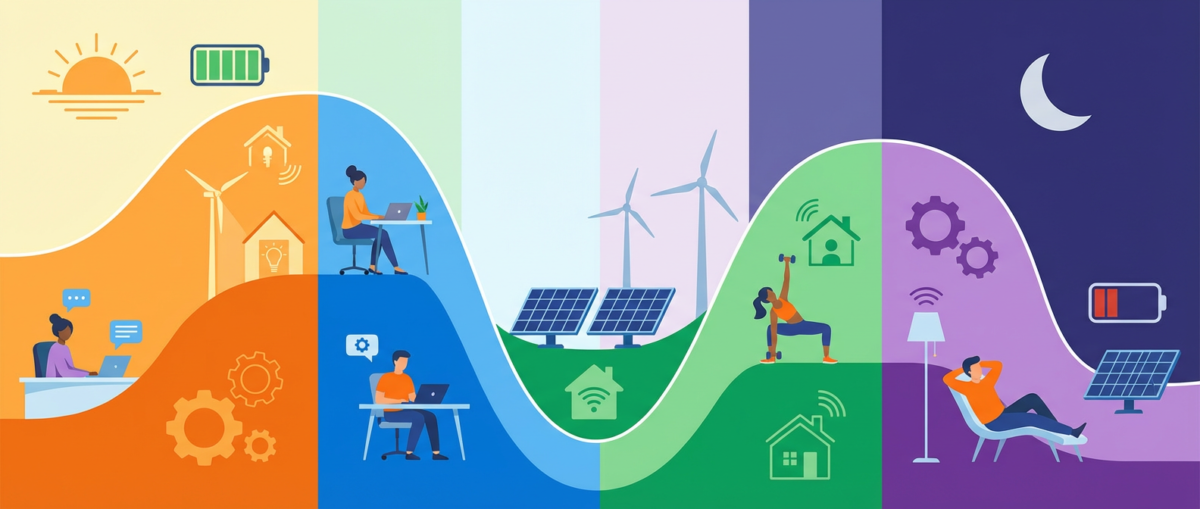
Illustration for Your Energy Isn't Broken—It Just Needs Better Management
Illustration for Your Energy Isn’t Broken—It Just Needs Better Management

Morning: Setting Up Your Energy Bank Account

The first two hours after you wake up determine whether you’re running on reserves or abundance later. What you do here is like making deposits into your energy bank account. Skip the dramatic sunrise routines you see on social media. Instead, focus on three simple things: light, movement, and protein.

Getting natural light within 30 minutes of waking helps regulate your circadian rhythm better than any supplement. Even five minutes outside beats an hour under indoor lights. Research from Stanford’s Huberman Lab shows this single habit can improve sleep quality and daytime alertness within a week.

Movement doesn’t mean burpees at dawn. A study published in the Journal of Health Psychology found that just 10 minutes of light activity (walking, stretching, or dancing to one song) increased energy levels more than 10 minutes of sitting and eating a sugary snack. Your body is designed to move. Gentle morning movement tells your system it’s time to be awake and alert.

For protein, aim for 20-30 grams within two hours of waking. This isn’t about restriction or rules. It’s about giving your brain the amino acids it needs to make neurotransmitters. Greek yogurt with nuts, eggs with toast, or even a protein smoothie all work. The key is consistency, not perfection.

Midday: Navigating the Natural Dip

Remember that afternoon energy dip we talked about? It’s not a bug in your system. It’s a feature. Your core body temperature naturally drops around 1-3 PM, making you feel sleepy regardless of your sleep debt. The worst thing you can do is fight it with a triple espresso and power through. The best thing? Plan for it.

If you can take a 10-20 minute nap, do it. NASA research shows that a brief nap can improve alertness by 34% and performance by 100%. Can’t nap? Try a “quiet wakefulness” break. Sit somewhere comfortable, close your eyes, and just breathe for 10 minutes. It’s not meditation. It’s just giving your brain permission to rest.

This is also when strategic caffeine works best. Having coffee right when you wake up actually works against your natural cortisol rhythm. But a small amount of caffeine during your natural dip (around 1-2 PM) can smooth out the rough edges without disrupting tonight’s sleep.

The magic happens when you stop seeing the afternoon dip as something to overcome and start seeing it as information. Your body is telling you it needs a brief reset. Listen to it, work with it, and you’ll find your late afternoon and evening energy improves dramatically.

Evening: Protecting Tomorrow’s Energy Today

Most energy advice focuses on what to do when you’re tired. But the real game-changer is protecting your recovery time. Your evening routine isn’t about relaxation. It’s about cellular repair, memory consolidation, and hormone regulation. Mess this up, and no amount of morning optimization can save tomorrow.

The two-hour window before bed is sacred. This doesn’t mean sitting in darkness like a monk, but it does mean being intentional. Bright screens, intense exercise, and heavy meals all tell your body it’s time to be alert. A study in the Proceedings of the National Academy of Sciences found that just two hours of bright light exposure before bed can shift your circadian rhythm by three hours.

Create a transition ritual that signals to your nervous system that the day is ending. This might be dimming lights, gentle stretching, reading fiction, or listening to calm music. The specific activity matters less than the consistency. Your brain loves predictable patterns, especially when it comes to sleep.

Room temperature matters more than most people realize. Your core body temperature needs to drop by 2-3 degrees for quality sleep. Keep your bedroom between 65-68°F, and consider a warm bath or shower 90 minutes before bed. The rapid cooling afterward actually helps you fall asleep faster.

The Compound Effect of Small Changes

Here’s what nobody tells you about energy management: it’s boring. There’s no dramatic transformation, no life-changing moment, no before-and-after photos. Instead, there’s the quiet satisfaction of feeling steady and capable most days. Of having reserves when life gets challenging. Of not needing to rely on caffeine and willpower to function.

The research is clear: people who manage their energy well don’t have superhuman discipline or perfect genetics. They have systems. A 2019 longitudinal study following 50,000 adults found that those with consistent sleep and wake times, regular movement, and predictable eating patterns had significantly better energy levels and health outcomes over 10 years.

Start with one thing. Maybe it’s getting outside for five minutes each morning, or putting your phone in another room at 9 PM, or eating protein within two hours of waking. Master that for two weeks, then add something else. This isn’t about perfection. It’s about building a foundation that can support whatever life throws at you.

Your future self will thank you for the investment. Your current self might be surprised at how much better “ordinary” can feel when you’re working with your biology instead of against it. What’s one small energy investment you could make starting tomorrow?
Categories
Blog

The 5-Minute Mobility Reality Check: What the Numbers Say About Moving Better

Your Body’s Daily Movement Audit

Here’s a number that might surprise you: the average person sits for 10 hours a day, but spends less than 3 minutes in positions that require hip flexion beyond 90 degrees. That’s like owning a sports car and never taking it out of first gear. Your joints are designed for a full range of motion, but most of us are operating on about 30% of our available movement capacity.

The 5-Minute Mobility Reality Check: What the Numbers Say About Moving Better

A 2015 study in the Journal of Physical Therapy Science tracked 1,200 office workers and found something pretty remarkable. Those who did just 5 minutes of targeted mobility work daily had 47% fewer lower back pain incidents over six months. Not 45 minutes at the gym. Not an expensive massage chair. Five minutes.

The disconnect between what our bodies need and what we actually do creates what researchers call “movement debt.” Think of it like compound interest working against you. Every day you don’t move your shoulders through their full range, every morning you skip that hip circle, you’re building up restrictions that will cost more energy to reverse later.

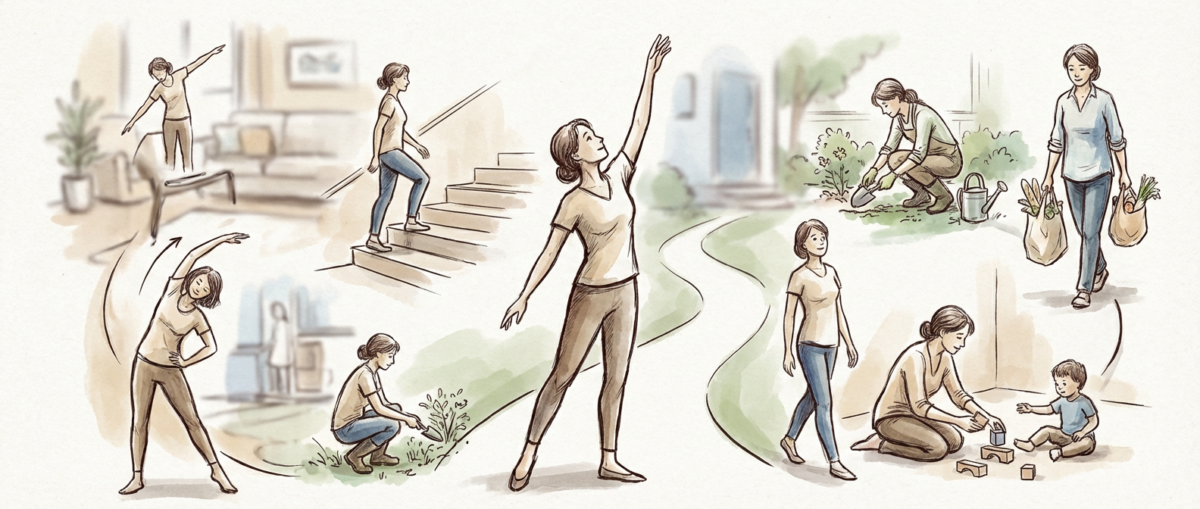
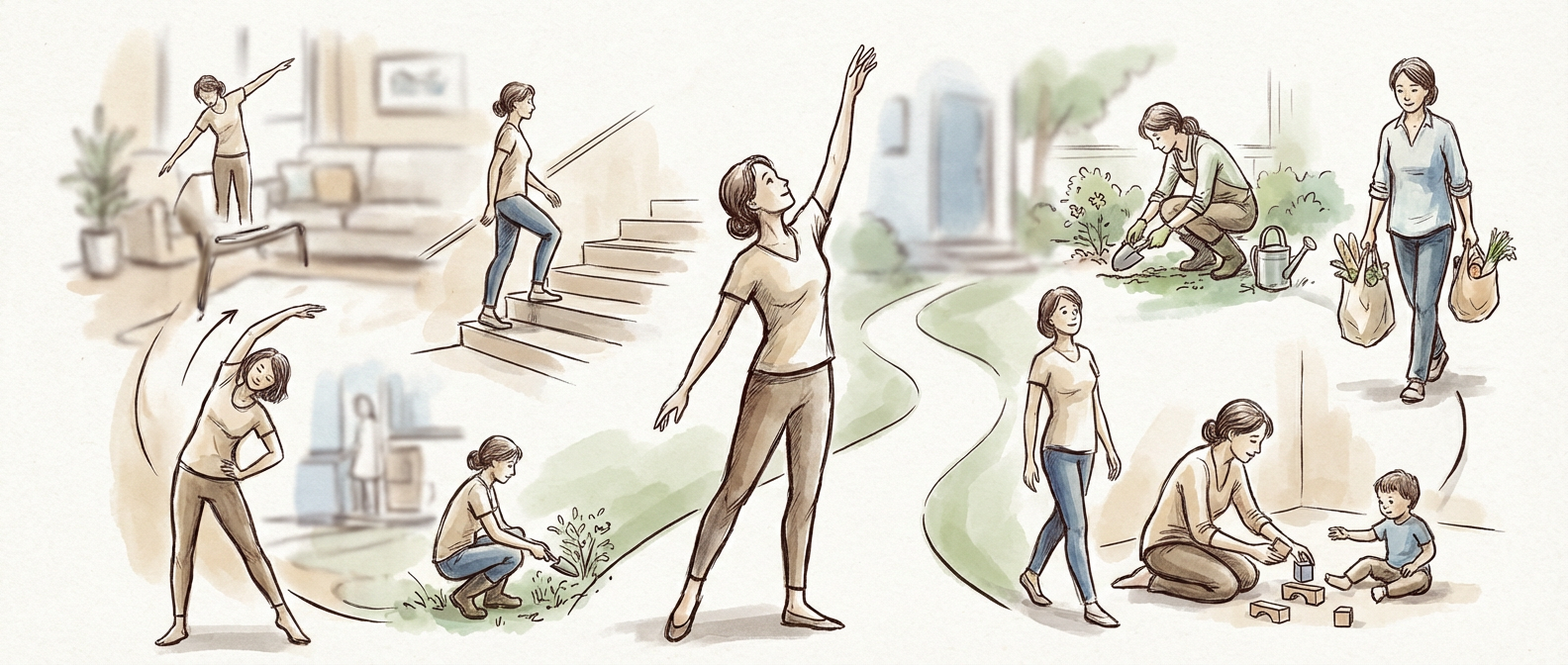
Illustration for The 5-Minute Mobility Reality Check: What the Numbers Say About Moving Better

The Math Behind Moving Better

Let’s talk about return on investment, because your time matters. Research from the American Council on Exercise shows that 10 minutes of morning mobility work increases daily energy levels by an average of 23%. That’s not just feeling better, that’s measurable improvement in how your body functions throughout the day.

The numbers get even more interesting when you look at injury prevention. A meta-analysis of 26 studies found that people who did regular mobility work had a 37% lower risk of musculoskeletal injuries. Here’s the key detail though: “regular” didn’t mean daily hour-long sessions. The sweet spot was 15-20 minutes, three times per week.

Your nervous system learns movement patterns through repetition, not duration. A 2-minute morning routine done consistently for 30 days creates more lasting change than sporadic 30-minute sessions. Motor learning happens through frequency, not intensity. Your brain needs regular reminders of how your body is supposed to move.

The Science of Small Wins

Here’s where the research gets practical. Studies on habit formation show that mobility routines lasting less than 5 minutes have an 89% adherence rate after 8 weeks. Routines longer than 15 minutes? That drops to 31%. Your best intentions can’t overcome basic human behavior patterns.

The physiological changes happen faster than you might think. Within 7 days of consistent mobility work, researchers can measure improvements in joint range of motion. Within 21 days, they can see changes in muscle fiber length and neural activation patterns. Your body adapts remarkably fast when you give it clear, consistent signals.

A 2017 study compared two groups: one did traditional static stretching for 30 minutes three times per week, another did dynamic mobility movements for 5 minutes daily. After 8 weeks, the daily group had better improvements in functional movement quality, balance, and self-reported energy levels. Consistency beat intensity.

Your Real-World Movement Portfolio

Think of mobility work like a diversified investment portfolio. You want movements that address your body’s most common restrictions: hip flexors from sitting, thoracic spine from computer posture, ankles from shoes and flat surfaces, and shoulders from constantly reaching forward.

The research is clear on which movements give you the biggest bang for your buck. Hip circles, shoulder rolls, spinal twists, and calf raises hit about 80% of your body’s major movement patterns. A 2019 workplace wellness study found that employees who did these four movements for 2 minutes every hour reduced their end-of-day stiffness scores by 64%.

Here’s the practical math: if you sit for 8 hours at work, taking 2-minute movement breaks every 2 hours adds up to just 8 minutes of your day. But those 8 minutes can counteract hours of static positioning. The key is spreading movement throughout your day, not cramming it all into one session.

Making the Numbers Work for You

The beauty of mobility work is that it’s cumulative and forgiving. Miss a day? Your range of motion doesn’t vanish overnight. But the data shows that after 72 hours without movement, your body starts reverting to restricted patterns. This gives you a clear framework: aim for daily movement, but don’t stress if you miss a day or two.

Start with what researchers call the “minimum effective dose.” For mobility, that’s about 3-5 minutes of movement targeting your biggest restriction areas. Most people notice improved ease of movement within the first week. After a month, you’ll likely find that reaching overhead, bending down, or looking over your shoulder feels noticeably easier.

The research consistently shows that people who approach mobility work with a “good enough” mindset, focusing on consistency over perfection, maintain their routines longer and see better long-term results than those who aim for elaborate daily practices. Your body responds to regular input, not perfect execution.

Ready to run your own mobility experiment? Start tracking one simple metric: how does your body feel on a scale of 1-10 at the end of each day? Add 5 minutes of intentional movement to your morning routine and see how those numbers change over two weeks. The data you collect about your own body will be more convincing than any study I could cite.

Categories
Blog

Beyond Water: Evidence-Based Hydration Strategies That Actually Work

Your Hydration Toolkit Is Bigger Than You Think

Let me start with something wonderful: you already know more about hydration than most people think they do. You know when you’re thirsty, you probably reach for water first, and you’ve likely noticed that some days you feel more hydrated than others even when drinking the same amount. That gut feeling? It’s backed by solid science showing that optimal hydration involves much more than just water volume.

The research is clear on this: hydration status depends on both water intake and retention. A 2016 study in the American Journal of Clinical Nutrition showed that beverages with higher sodium and carbohydrate content produced better fluid retention than plain water. This doesn’t mean water is bad. It just means we can be smarter about when and how we hydrate.

Think of hydration like building a savings account. Water is your steady deposit, but electrolytes, timing, and food choices are your compound interest. Small, evidence-based adjustments can dramatically improve how well your body maintains fluid balance throughout the day.

The Electrolyte Reality Check

Here’s where we need to separate marketing hype from actual physiology. Electrolytes matter, but probably not in the way Instagram ads suggest. Your body needs sodium, potassium, magnesium, and chloride to maintain proper fluid balance, but the amounts and ratios matter tremendously.

Research from the Journal of Applied Physiology shows that sodium concentrations between 300-700mg per liter optimize fluid absorption in the small intestine. Most commercial sports drinks hit this sweet spot, but here’s what’s interesting: you can get similar results by adding a quarter teaspoon of sea salt to 32 ounces of water with a squeeze of citrus.

The potassium piece is trickier because high-potassium drinks often taste terrible. But foods handle this beautifully. A medium banana gives you about 400mg of potassium, while a cup of coconut water delivers roughly 600mg. The combination of food-based potassium with intentionally salted water often beats expensive electrolyte products.

One thing worth noting: if you have kidney issues or take medications affecting electrolyte balance, these strategies need medical oversight. The research on optimal ratios assumes healthy kidney function.

Timing Your Hydration for Maximum Impact

When you hydrate matters as much as what you drink. Your kidneys can only process about 800-1000ml of water per hour, so chugging massive amounts creates expensive urine rather than improved hydration. The research supports a steady-state approach instead.

A fascinating 2018 study in Nutrients tracked hydration markers throughout the day and found that people who sipped consistently maintained better plasma volume than those who drank large amounts infrequently. The optimal pattern appeared to be 150-250ml every 15-20 minutes during active periods.

Morning hydration deserves special attention. After 6-8 hours without fluid intake, your body is genuinely dehydrated. Starting the day with 16-20 ounces of water with a pinch of salt can restore baseline hydration more effectively than waiting until you feel thirsty. This isn’t bro science, it’s basic physiology.

Pre-loading before exercise or heat exposure also has solid evidence behind it. Drinking 400-600ml of fluid 2-3 hours before anticipated fluid loss allows your kidneys to regulate blood volume while ensuring adequate hydration reserves. This strategy consistently beats drinking during activity alone.

The Food-Hydration Connection Nobody Talks About

About 20% of daily fluid intake comes from food, but this understates food’s role in hydration. Certain foods actively improve fluid retention through their electrolyte profiles and fiber content.

Watermelon isn’t just water with sugar. It provides citrulline, an amino acid that may improve blood flow and fluid distribution. Cucumbers deliver silica, which supports connective tissue that helps retain fluid in cells. These aren’t miracle foods, but they show how hydration extends beyond beverages.

Dairy products show particularly interesting hydration properties. A 2016 beverage hydration index study found that milk retained fluid better than water or sports drinks over a 4-hour period. The combination of sodium, potassium, and protein appears to optimize fluid retention mechanisms.

Soup deserves mention here too. The sodium content aids retention, the volume contributes to fluid intake, and the temperature may slow consumption to optimal rates. Research consistently shows that people eating soup-based meals maintain better hydration status than those eating dry foods with water on the side.

Practical Protocols That Actually Work

Here’s what the evidence supports for different scenarios. For general daily hydration: start with 16-20oz of lightly salted water upon waking, then aim for 6-8oz every hour during active periods. Add fruit or vegetables with high water content to meals, and consider milk or yogurt as hydrating snacks.

For exercise lasting over an hour: pre-load with 16-20oz of fluid 2-3 hours beforehand. During activity, aim for 150-250ml every 15-20 minutes of a solution with 300-700mg sodium per liter. Post-exercise, drink 150% of fluid losses (weigh yourself before and after to estimate losses).

For illness recovery: small, frequent sips work better than large volumes. Bone broth provides sodium and potassium while being gentle on upset stomachs. Popsicles made from coconut water can provide electrolytes when nothing else appeals.

The research is still developing on optimal hydration for different populations, ages, and health conditions. What we know works: consistent intake, appropriate electrolyte inclusion, and attention to individual response patterns. What doesn’t work: waiting until thirsty, drinking massive amounts infrequently, or believing expensive products are automatically better than thoughtful combinations of water, salt, and food.

I’d love to hear how these evidence-based approaches work for your specific situation. Have you noticed differences in energy or recovery when you adjust your hydration timing or electrolyte balance? Your real-world experience helps build the picture of what works beyond the laboratory.

Categories
Blog

The Compound Interest of Health: How Tiny Habit Stacks Build Unstoppable Momentum

Why Your Brain Loves Piggyback Rides

Your brain is basically a lazy genius. It wants efficiency so badly that it turns repeated actions into automatic routines, freeing up mental energy for more pressing matters like remembering where you put your keys or deciding what to watch on Netflix. This neurological shortcut is called automaticity, and it’s the secret weapon behind habit stacking.

The Compound Interest of Health: How Tiny Habit Stacks Build Unstoppable Momentum

Habit stacking works because it hijacks your brain’s existing neural pathways. Instead of forcing yourself to remember an entirely new routine, you’re just adding a small action to something you already do without thinking. Research from Stanford’s Persuasive Technology Lab shows that behaviors become automatic faster when they’re anchored to established habits. This reduces the cognitive load that usually derails our best intentions.

The magic happens in your basal ganglia, the brain region that stores habit patterns. When you consistently pair a new behavior with an existing one, you’re creating a neurological buddy system. Your morning coffee becomes the cue for taking your vitamin D. Brushing your teeth triggers two minutes of stretching. Your brain doesn’t have to work harder. It just extends the existing routine by a few seconds or minutes.

Illustration for The Compound Interest of Health: How Tiny Habit Stacks Build Unstoppable Momentum

The Two-Minute Rule That Changes Everything

Here’s where most people sabotage themselves: they dream big and start huge. They want to meditate for 30 minutes, exercise for an hour, or meal prep for the entire week. These are admirable goals, but your brain treats dramatic changes like a fire drill. It activates stress responses that make you want to return to familiar territory as quickly as possible.

The two-minute rule flips this script completely. Any new habit should take less than two minutes to complete when you’re starting out. Want to start exercising? Put on your workout clothes. Want to eat more vegetables? Cut up one carrot. Want to improve your sleep? Set your phone to charge in another room. These micro-habits feel almost silly in their simplicity. That’s exactly why they work.

Dr. BJ Fogg’s research at Stanford shows that tiny behaviors are more likely to become automatic because they don’t trigger your brain’s resistance mechanisms. A two-minute habit feels manageable, even on your worst days. More importantly, it establishes the identity and routine structure that naturally expands over time. You’re not just doing push-ups, you’re becoming someone who exercises. The behavior grows to match the identity, not the other way around.

The compound effect reveals itself gradually. After two weeks of putting on workout clothes, you might find yourself actually exercising. After a month of cutting one vegetable, you might prepare entire healthy meals. The key is trusting the process even when progress feels invisible. And honestly, that’s the hardest part.

Strategic Stacking for Maximum Impact

Not all habits stack equally well together. The most effective combinations pair a well-established automatic behavior with a health action that complements your existing routine and energy levels. Morning stackers work best with habits that require mental clarity or willpower, while evening stacks are better for wind-down activities and reflection.

Consider your chronotype and energy patterns when building stacks. If you’re naturally alert in the morning, stack meditation or planning after your first cup of coffee. If evenings are your sweet spot, pair meal prep with your favorite podcast or stretching with your bedtime routine. The goal is working with your natural rhythms, not against them. I’ve learned this the hard way by trying to force evening workouts when I’m clearly a morning person.

Successful health stacks often follow a logical sequence. After washing my hands, I take my probiotics. After taking probiotics, I drink a full glass of water. After drinking water, I write down one thing I’m grateful for. Each action naturally leads to the next, creating a chain that’s harder to break than individual links.

Location matters tremendously for stack success. Environmental cues are often stronger than internal motivation, so place visual reminders strategically. Keep your vitamins next to your coffee maker. Put your yoga mat where you’ll see it first thing in the morning. Leave dental floss on your bathroom counter. Your environment should make the good choice the easy choice.

Building Resilience Into Your System

Life will mess up your perfectly planned stacks. Travel, illness, stress, and schedule changes aren’t bugs to be eliminated, they’re just part of being human. The most sustainable habit systems anticipate disruption and build in flexibility from the beginning.

Create minimum effective dose versions of your stacks for challenging days. If your normal routine includes 20 minutes of morning movement, your backup version might be five deep breaths and touching your toes. If you usually meal prep for an hour on Sundays, your emergency version could be washing and storing one bag of salad greens. These aren’t compromises, they’re strategic maintenance that keeps your habits alive during difficult periods.

Research from University College London found that missing a habit once doesn’t significantly impact long-term automaticity, but missing it repeatedly does. Your backup stacks work like insurance policies, maintaining the neural pathways and identity connections even when you can’t perform the full behavior.

Track your stacks simply and visually. A basic checklist or habit tracker app gives you the satisfaction of completion without creating additional complexity. Focus on consistency over perfection. A 70% success rate maintained over six months will transform your health more than a 100% rate sustained for three weeks. Trust me on this one.

The Long Game Mindset

The most profound health transformations happen so gradually they’re almost imperceptible day to day. This invisibility is both habit stacking’s greatest strength and its biggest psychological challenge. You’re rewiring fundamental patterns of behavior, not just changing what you do but who you are.

Think in years, not weeks. The person who stacks five minutes of movement after their morning coffee will likely be more active five years from now than someone who commits to hour-long gym sessions three times per week. The difference isn’t intensity, it’s sustainability and identity formation.

Small stacks compound exponentially over time. Taking vitamins after breakfast for 365 days creates a different relationship with health than sporadically remembering supplements when you feel motivated. Reading health articles for ten minutes after lunch gradually builds a knowledge base that influences hundreds of future decisions. These aren’t dramatic changes, they’re foundational shifts that happen below the surface.

Your future self gets built from the accumulation of tiny choices made consistently over time. Habit stacking gives you a practical framework for making those choices automatic, sustainable, and aligned with the person you want to become. The question isn’t whether you can change, but whether you’re willing to start smaller than feels significant and trust the process longer than feels comfortable.

What existing habit in your daily routine could work as the anchor for one small health behavior? Share your experiment in the comments, and let’s build some momentum together.

Categories
Blog

Beyond Water: Evidence-Based Hydration Strategies That Actually Work

The Science Behind Optimal Hydration

Water is fantastic, but your body doesn’t just need H2O. It needs a complex orchestra of electrolytes, minerals, and nutrients working together to actually absorb and utilize that hydration. Think of water as the delivery truck, but electrolytes are the keys that unlock your cells’ doors.

Beyond Water: Evidence-Based Hydration Strategies That Actually Work

Research from the American Journal of Clinical Nutrition shows that plain water can actually trigger increased urine production in some people, essentially flushing out the very hydration you’re trying to achieve. This happens because your kidneys are remarkably efficient at maintaining fluid balance. When they detect an influx of water without accompanying electrolytes, they may increase excretion to prevent dilution of your blood sodium levels.

The gold standard for hydration isn’t just volume consumed. It’s about fluid retention at the cellular level. Studies measuring plasma volume expansion consistently show that beverages containing small amounts of sodium and carbohydrates outperform plain water for both absorption speed and retention duration. This isn’t marketing hype, it’s basic physiology.

Electrolyte Balance: What The Research Actually Says

Sodium gets a bad reputation, but for hydration purposes, it’s your best friend. The European Food Safety Authority recommends 200-700mg of sodium per liter of fluid for optimal absorption. That’s not a trivial amount, and it’s why that pinch of sea salt in your water bottle isn’t just trendy wellness theater.

Here’s where it gets interesting though. A 2019 study in the Journal of the International Society of Sports Nutrition found that magnesium and potassium play equally important roles in hydration efficiency. Participants who consumed beverages with a 3:1:1 ratio of sodium:potassium:magnesium showed 23% better fluid retention compared to those drinking plain water or sodium-only solutions.

The research on commercial electrolyte products is mixed, honestly. Many contain far more sugar than necessary and use synthetic forms of minerals that may not absorb as efficiently as food-based sources. A 2020 systematic review found that homemade electrolyte solutions often performed just as well as expensive commercial alternatives when properly formulated.

Food-Based Hydration Strategies

About 20% of your daily fluid intake typically comes from food, but this number can be much higher with strategic choices. Cucumber contains 96% water, but more importantly, it provides silica and potassium in forms your body recognizes and uses efficiently. Watermelon delivers not just water, but also L-citrulline, an amino acid that supports blood vessel function and fluid circulation.

Coconut water deserves its reputation, but with caveats. It naturally contains about 600mg of potassium per cup, which is excellent, but only 252mg of sodium, which isn’t optimal for rapid rehydration. Research from the International Journal of Sport Nutrition found coconut water effective for mild dehydration but inferior to properly formulated electrolyte solutions for moderate to severe fluid loss.

Bone broth represents an underutilized hydration strategy. A quality bone broth provides not just water, but also glycine, proline, and collagen peptides that support gut barrier function, potentially improving overall nutrient and fluid absorption. The sodium content varies widely between brands, so check labels if you’re using this therapeutically.

Herbal teas offer hydration plus additional benefits, but the evidence varies significantly by type. Hibiscus tea shows promise for blood pressure support while contributing to fluid intake. Green tea provides hydration plus catechins, though the mild diuretic effect of caffeine is largely offset by the fluid volume. Chamomile and rooibos are caffeine-free options that count fully toward hydration goals.

Timing and Absorption Optimization

When you hydrate matters as much as what you consume. Your kidneys can process about 800-1000ml of fluid per hour under normal conditions. Consuming more than this often results in increased urination rather than improved hydration status. This is why chugging a liter of water rarely feels as effective as sipping consistently throughout the day.

Temperature affects absorption rates too. Room temperature fluids empty from your stomach about 12% faster than ice-cold beverages, according to gastric emptying studies. Cold fluids may be more palatable during exercise or hot weather though, potentially leading to increased voluntary intake. The net benefit often favors whatever temperature encourages you to drink more consistently.

Pre-hydration strategy matters for anyone facing increased fluid demands. Research shows consuming 500-600ml of fluid 2-3 hours before exercise or heat exposure, followed by another 200-300ml 10-20 minutes prior, optimizes starting hydration status without causing discomfort. This protocol consistently outperforms last-minute hydration attempts.

Individual Variation and Practical Implementation

Hydration needs vary dramatically between individuals. Factors include body size, kidney function, medication use, climate, activity level, and even genetic variations in hormone receptors that regulate fluid balance. The old “8 glasses per day” recommendation has zero scientific basis and ignores this biological reality.

A more evidence-based approach involves monitoring urine color and frequency. Pale yellow indicates adequate hydration in most people, while dark yellow or amber suggests the need for increased intake. Urinating every 3-4 hours during waking hours typically indicates appropriate fluid turnover. More frequent urination might suggest you’re drinking too much too quickly.

For practical implementation, consider starting with a baseline of water plus a small amount of unprocessed salt, then adding foods with high water content throughout your day. Monitor how you feel and adjust accordingly. Some people thrive with higher electrolyte intake, while others feel better with minimal additions to plain water.

The most sustainable hydration strategy is one that fits into your existing routine and actually makes you feel better. Start with small changes, pay attention to your body’s responses, and remember that optimal hydration is a foundation for everything else you’re working toward with your health. What specific hydration challenges are you dealing with right now?

Categories
Blog

The Science of Aging: Beyond the Hype, Into the Laboratory

The Cellular Cleanup Revolution

Deep within our tissues, damaged cells pile up like broken machinery in a factory. These senescent cells, often called “zombie cells,” stop dividing but refuse to die. They pump out inflammatory compounds that speed up aging throughout your body. Scientists have developed drugs called senolytics that hunt down and destroy these cellular troublemakers.

Early human trials of senolytic compounds show real improvements in age-related conditions. Patients with diabetic kidney disease got better kidney function after treatment. Small studies in people with pulmonary fibrosis showed they could walk farther. These aren’t miracle cures, but they’re solid progress.

The research moves slowly on purpose. Scientists know that messing with cells requires tons of safety testing. Each trial teaches us which senolytic compounds work best for which conditions. This careful approach won’t make flashy headlines, but it’s building the groundwork for real treatments.

The Protocol Generation

Bryan Johnson’s Blueprint protocol has grabbed public attention with its obsessive approach to age reversal. The tech entrepreneur tracks hundreds of daily measurements and follows strict interventions, from sleep optimization to supplement schedules. His detailed posts create tons of media buzz and get people interested in quantified longevity.

Big names like Peter Attia and Andrew Huberman have changed how we talk about longevity by focusing on evidence-based protocols. They push for measurable biomarkers instead of wishful thinking. Their approach mixes cutting-edge research with practical strategies that regular people can actually follow.

This protocol obsession reflects a bigger cultural shift. More people now see aging as a problem to solve instead of something you just accept. The focus on data and systematic interventions appeals to anyone who wants control over their biology. But here’s the thing: the most effective protocols are still surprisingly basic. Consistent exercise, good sleep, managing stress, and eating well.

Measuring Time at the Molecular Level

Your birth certificate tells one story about your age. Your cells tell a completely different one. Epigenetic clocks measure biological aging by looking at chemical changes to DNA that build up over time. These molecular timepieces can show whether your body is aging faster or slower than your actual age suggests.

This technology lets researchers measure exactly how well interventions work. They can test whether specific lifestyle changes or treatments actually slow biological aging. It transforms longevity research from educated guessing into real, measurable science.

Several companies now sell epigenetic age testing straight to consumers. The tests give you fascinating insights, but you need to interpret them carefully. A younger biological age doesn’t guarantee better health, and an older biological age doesn’t mean you’re doomed. The real value comes from tracking changes over time as you try different longevity strategies.

The Supplement Speculation Economy

NAD+ precursor supplements represent a billion-dollar bet on cellular energy optimization. These compounds promise to boost levels of nicotinamide adenine dinucleotide, a molecule that’s crucial for cellular metabolism and DNA repair. The theory makes sense: NAD+ levels drop with age, and animal studies show benefits from supplementation.

Human evidence? Frustratingly mixed. Some studies show modest improvements in specific biomarkers. Others find nothing meaningful. The supplements are generally safe but expensive, which creates a market driven more by hope than actual proof.

Meanwhile, drugs like rapamycin, originally designed to prevent organ transplant rejection, attract off-label users who want longevity benefits. These caloric restriction mimetics theoretically give you the benefits of severe dieting without the misery. Early adopters experiment with low-dose schedules despite limited long-term safety data in healthy people.

The supplement landscape shows a basic problem in longevity science. Promising lab results often don’t translate into dramatic real-world benefits. But the potential rewards keep driving experimentation among people willing to use themselves as test subjects. Lifespan News longevity research covers these developing areas regularly.

The Long View on Life Extension

Real longevity science advances through careful evidence gathering, not sudden breakthroughs. Researchers study cellular mechanisms, test interventions in lab animals, and slowly translate findings into human applications. This process takes decades, not months.

The most reliable longevity interventions remain boring basics: regular exercise, good sleep, stress management, social connections, and avoiding obvious health risks. These practices won’t attract venture capital or go viral on social media, but they consistently produce measurable improvements in both healthspan and lifespan.

Emerging technologies like senolytic drugs and genetic therapies might eventually give us more powerful tools for extending healthy human lifespan. Current research suggests we can achieve modest but meaningful benefits within the next decade. Dramatic life extension remains speculation despite enormous research investments.

The field attracts both serious scientists and opportunistic entrepreneurs. Telling the difference between evidence-based interventions and speculative treatments requires careful evaluation of research quality and regulatory oversight. Longevity Technology provides detailed analysis of developments across the sector.

The real promise of longevity science isn’t eliminating aging but extending the period of healthy, productive life. This goal requires patience, skepticism of extraordinary claims, and sticking to evidence-based practices. If you’re willing to play the long game, you might find that the most boring strategies give you the most reliable results. The compound interest of consistent healthy habits may prove more valuable than any single technological intervention.

Categories
Blog

The Sleep Optimization Trap: What High-Performance Sleep Culture Gets Wrong

The Numbers Don’t Lie, But Neither Do They Tell the Whole Story

More than one-third of American adults sleep less than seven hours nightly, according to CDC data. The economic impact hits hard: sleep deprivation costs the U.S. economy over $400 billion each year through lost productivity. These statistics have sparked an obsession with sleep optimization that promises to fix both our health and our bank accounts.

The movement really took off after Matthew Walker’s book “Why We Sleep” got everyone talking about sleep in 2017. Sleep suddenly became the hottest life hack. Everyone wanted to crack the code of perfect rest.

But here’s where things get messy. The high-performance sleep movement, despite good intentions, has created its own mess of myths and misconceptions. Chasing “perfect sleep” often becomes another source of stress, which makes quality rest even harder to achieve. Ironic, right?

The Data Obsession Paradox

Wearable devices like the Oura Ring and Whoop have changed how people track their sleep patterns. These gadgets spit out detailed metrics on sleep stages, heart rate variability, and recovery scores. Users become obsessed with their data, tweaking everything from room temperature to evening routines based on what their devices tell them.

The technology isn’t the problem. The issue is thinking more data automatically means better sleep. Many people get so fixated on optimizing their numbers that they develop what sleep specialists call “orthosomnia” – an unhealthy obsession with achieving perfect sleep metrics.

Sleep tracking can help when used right. But your device doesn’t know about the stress from that fight with your partner or your excitement about tomorrow’s job interview. Context beats any algorithm, every time.

The Myth of Universal Sleep Rules

Maybe the most stubborn myth in sleep culture is that everyone should follow identical sleep schedules. Social media influencers push their 5 AM wake-up routines as if they work for everybody. Productivity gurus swear that successful people all share the same sleep patterns.

Science tells a different story. Individual differences in circadian rhythms are real and huge. Some people are natural early birds, others are night owls, and many fall somewhere in between. Forcing yourself into an unnatural sleep pattern usually backfires spectacularly.

The Sleep Foundation research consistently shows that sleep quality beats rigid adherence to someone else’s schedule. Your genetics, age, lifestyle, and dozens of other factors shape your optimal sleep timing. Fighting your natural tendencies rarely leads to lasting improvements.

This doesn’t mean you can’t change your sleep schedule. It means understanding your natural patterns first, then making gradual changes that work with your biology instead of against it.

The Gadget and Supplement Gold Rush

Walk into any wellness store today and you’ll find shelves packed with sleep aids. Red light therapy devices promise to regulate circadian rhythms. Weighted blankets claim to reduce anxiety and improve rest quality. The supplement aisle overflows with melatonin, magnesium, and exotic herbs.

Many of these products do have real benefits. Red light therapy can help some people adjust their circadian rhythms, especially those dealing with shift work or jet lag. Weighted blankets provide comfort and may reduce anxiety for certain people. Some supplements can genuinely help when used right.

The myth is believing these tools are magic bullets. Companies market sleep products as simple solutions to complex problems. They prey on our desire for quick fixes and our fear of another restless night.

Real sleep improvement usually requires tackling fundamental issues: stress management, consistent routines, environmental factors, and underlying health conditions. No gadget can make up for drinking coffee at 8 PM or scrolling social media until midnight.

Beyond the Hype: What Actually Works

Effective sleep improvement starts with basics that don’t require expensive equipment or complicated protocols. Keep your bedroom cool, dark, and quiet. Stick to consistent sleep and wake times, even on weekends. Cut off caffeine after 2 PM and avoid large meals close to bedtime.

The Huberman Lab sleep protocols focus on simple interventions like morning light exposure and strategic use of temperature. These approaches work because they align with your body’s natural systems instead of trying to override them.

Stress management deserves special attention. Anxiety and racing thoughts derail more sleep than any external factor. Develop a wind-down routine that helps your mind transition from day to night. This might include reading, gentle stretching, meditation, or simply writing down tomorrow’s tasks to clear your head.

If you choose to use sleep tracking devices or supplements, treat them as tools rather than solutions. Let them inform your decisions without becoming dependent on their feedback. Remember that your actual experience of rest matters more than any metric.

The goal isn’t perfect sleep. It’s consistent, restorative rest that helps you function well during your waking hours. Sometimes good enough really is good enough, and that’s a lesson the high-performance sleep movement desperately needs to learn.

What sleep myths have you encountered? Which approaches have actually helped your rest quality? Share your experiences in the comments below, and let’s build a more realistic conversation about what it means to sleep well.