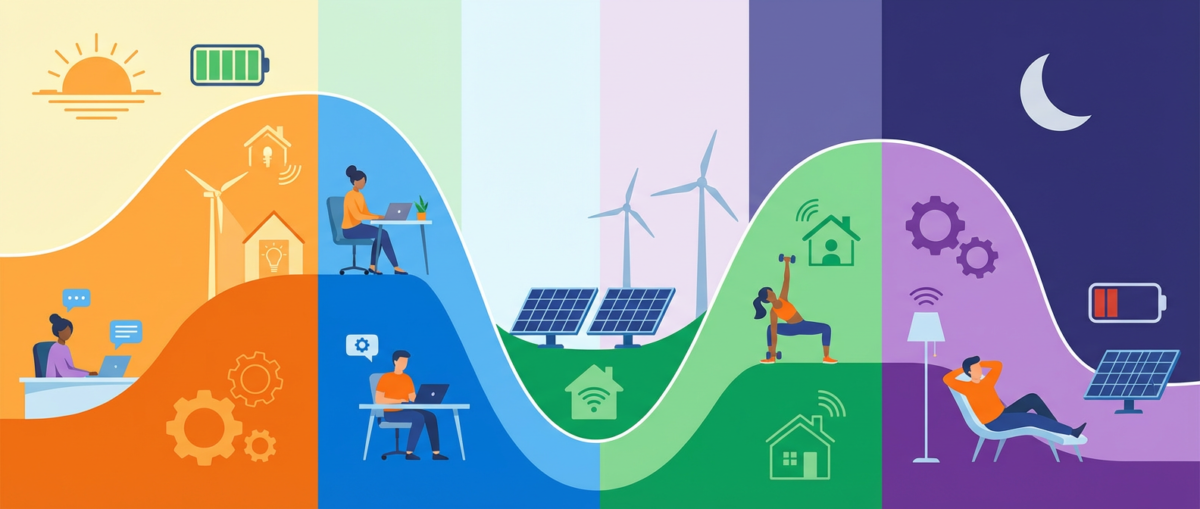
The Real Story About Energy Crashes
Let me start with something that might surprise you: feeling tired at 3 PM doesn’t mean you’re doing life wrong. Your energy naturally dips in the afternoon because of your circadian rhythm, the same biological clock that’s been keeping humans alive for thousands of years. A 2013 study in the journal Sleep Medicine found that alertness drops significantly between 1-4 PM, regardless of whether you’ve eaten lunch or had coffee.

The difference between people who crash hard and those who coast through? They work with their biology instead of against it. Think of energy management like compound interest for your body. Small, consistent choices add up to big differences over months and years, while quick fixes leave you right back where you started.
Your great-grandmother probably didn’t know about adenosine triphosphate or cortisol curves, but she understood something we’ve forgotten: energy isn’t unlimited. The goal isn’t to feel like a caffeinated hummingbird all day. It’s to have steady, reliable fuel for what matters most.
Morning: Setting Up Your Energy Bank Account
The first two hours after you wake up determine whether you’re running on reserves or abundance later. What you do here is like making deposits into your energy bank account. Skip the dramatic sunrise routines you see on social media. Instead, focus on three simple things: light, movement, and protein.
Getting natural light within 30 minutes of waking helps regulate your circadian rhythm better than any supplement. Even five minutes outside beats an hour under indoor lights. Research from Stanford’s Huberman Lab shows this single habit can improve sleep quality and daytime alertness within a week.
Movement doesn’t mean burpees at dawn. A study published in the Journal of Health Psychology found that just 10 minutes of light activity (walking, stretching, or dancing to one song) increased energy levels more than 10 minutes of sitting and eating a sugary snack. Your body is designed to move. Gentle morning movement tells your system it’s time to be awake and alert.
For protein, aim for 20-30 grams within two hours of waking. This isn’t about restriction or rules. It’s about giving your brain the amino acids it needs to make neurotransmitters. Greek yogurt with nuts, eggs with toast, or even a protein smoothie all work. The key is consistency, not perfection.
Midday: Navigating the Natural Dip
Remember that afternoon energy dip we talked about? It’s not a bug in your system. It’s a feature. Your core body temperature naturally drops around 1-3 PM, making you feel sleepy regardless of your sleep debt. The worst thing you can do is fight it with a triple espresso and power through. The best thing? Plan for it.
If you can take a 10-20 minute nap, do it. NASA research shows that a brief nap can improve alertness by 34% and performance by 100%. Can’t nap? Try a “quiet wakefulness” break. Sit somewhere comfortable, close your eyes, and just breathe for 10 minutes. It’s not meditation. It’s just giving your brain permission to rest.
This is also when strategic caffeine works best. Having coffee right when you wake up actually works against your natural cortisol rhythm. But a small amount of caffeine during your natural dip (around 1-2 PM) can smooth out the rough edges without disrupting tonight’s sleep.
The magic happens when you stop seeing the afternoon dip as something to overcome and start seeing it as information. Your body is telling you it needs a brief reset. Listen to it, work with it, and you’ll find your late afternoon and evening energy improves dramatically.
Evening: Protecting Tomorrow’s Energy Today
Most energy advice focuses on what to do when you’re tired. But the real game-changer is protecting your recovery time. Your evening routine isn’t about relaxation. It’s about cellular repair, memory consolidation, and hormone regulation. Mess this up, and no amount of morning optimization can save tomorrow.
The two-hour window before bed is sacred. This doesn’t mean sitting in darkness like a monk, but it does mean being intentional. Bright screens, intense exercise, and heavy meals all tell your body it’s time to be alert. A study in the Proceedings of the National Academy of Sciences found that just two hours of bright light exposure before bed can shift your circadian rhythm by three hours.
Create a transition ritual that signals to your nervous system that the day is ending. This might be dimming lights, gentle stretching, reading fiction, or listening to calm music. The specific activity matters less than the consistency. Your brain loves predictable patterns, especially when it comes to sleep.
Room temperature matters more than most people realize. Your core body temperature needs to drop by 2-3 degrees for quality sleep. Keep your bedroom between 65-68°F, and consider a warm bath or shower 90 minutes before bed. The rapid cooling afterward actually helps you fall asleep faster.
The Compound Effect of Small Changes
Here’s what nobody tells you about energy management: it’s boring. There’s no dramatic transformation, no life-changing moment, no before-and-after photos. Instead, there’s the quiet satisfaction of feeling steady and capable most days. Of having reserves when life gets challenging. Of not needing to rely on caffeine and willpower to function.
The research is clear: people who manage their energy well don’t have superhuman discipline or perfect genetics. They have systems. A 2019 longitudinal study following 50,000 adults found that those with consistent sleep and wake times, regular movement, and predictable eating patterns had significantly better energy levels and health outcomes over 10 years.
Start with one thing. Maybe it’s getting outside for five minutes each morning, or putting your phone in another room at 9 PM, or eating protein within two hours of waking. Master that for two weeks, then add something else. This isn’t about perfection. It’s about building a foundation that can support whatever life throws at you.
Your future self will thank you for the investment. Your current self might be surprised at how much better “ordinary” can feel when you’re working with your biology instead of against it. What’s one small energy investment you could make starting tomorrow?