Categories
Blog

The High Performance Sleep Revolution: What Science Actually Says About Optimizing Rest

The Sleep Crisis Meets Silicon Valley Solutions

More than one-third of American adults sleep fewer than seven hours nightly, according to recent CDC data. This widespread sleep deficit isn’t just a health concern—it’s an economic disaster, draining approximately $411 billion annually from U.S. productivity.

The High Performance Sleep Revolution: What Science Actually Says About Optimizing Rest

Enter the high performance sleep movement. What started as biohacker curiosity has grown into a data-driven pursuit of sleep optimization. Tech entrepreneurs track REM cycles like stock portfolios. Athletes monitor deep sleep percentages with the same intensity they analyze training metrics. We’re past asking whether sleep matters. Now the question is whether these new approaches actually work.

The movement gained serious momentum after neuroscientist Matthew Walker published “Why We Sleep” in 2017. Walker’s research-backed warnings about sleep deprivation sparked a cultural shift. Sleep went from being a necessary inconvenience to a performance lever. But separating genuine breakthroughs from expensive placebo effects means examining what the science actually supports.

Illustration for The High Performance Sleep Revolution: What Science Actually Says About Optimizing Rest

Wearables and the Quantified Sleep Revolution

Oura Rings and Whoop bands have made sleep tracking accessible beyond laboratory polysomnography. These devices measure heart rate variability, body temperature, and movement patterns to estimate sleep stages. Users obsess over their sleep scores like they’re playing a wellness video game.

The data revolution has merit. Consistent tracking reveals personal sleep patterns that subjective reporting misses. Many users discover they feel best with 7.5 hours rather than the standard eight-hour recommendation. Others spot lifestyle factors that consistently mess with their rest.

But consumer wearables have real limitations. They estimate sleep stages through indirect measurements, not direct brain activity monitoring. The accuracy varies significantly between devices and individuals. Sleep Foundation research suggests these tools work best for tracking trends rather than precise sleep architecture analysis.

The real value is in behavior change. When people see objective feedback about their sleep quality, they often make better choices about bedtime routines, alcohol consumption, and screen exposure. The device matters less than the awareness it creates.

Chronobiology and Individual Sleep Timing

Chronobiology research has confirmed what many suspected: we’re not all designed for the same sleep schedule. Genetic variations in circadian clock genes create genuine differences in optimal sleep timing. Some people naturally function best sleeping from 9 PM to 5 AM. Others peak with an 11 PM to 7 AM schedule.

This research challenges one-size-fits-all sleep advice. The traditional “early to bed, early to rise” wisdom works for morning chronotypes but can backfire for genetic night owls. Forcing a natural late sleeper into an early schedule often reduces total sleep time and quality.

The practical implications are big. Companies experimenting with flexible start times report improved employee performance and reduced sick days. Schools implementing later start times see better academic outcomes. The evidence suggests working with individual chronobiology rather than against it.

But modern life constraints limit chronotype flexibility. Most people must adapt their natural preferences to work schedules and social obligations. The goal becomes optimizing sleep quality within realistic timing constraints rather than achieving perfect chronobiological alignment.

Emerging Sleep Interventions: Red Light and Weighted Comfort

Red light therapy has gained traction as a natural sleep aid. The theory suggests that exposure to specific red wavelengths in the evening supports melatonin production while avoiding the circadian disruption caused by blue light. Some research supports this approach, particularly for shift workers struggling with irregular schedules.

Weighted blankets represent another growing category. The deep pressure stimulation mimics gentle hugging, potentially activating the parasympathetic nervous system and reducing cortisol levels. Small studies suggest benefits for anxiety-related sleep issues, though larger trials are needed for solid conclusions.

Both interventions show promise but require realistic expectations. Red light therapy won’t compensate for poor sleep hygiene or excessive caffeine intake. Weighted blankets help some people but may feel uncomfortable or overly warm for others. The research foundation exists but remains limited compared to established interventions like consistent sleep schedules and cool bedroom temperatures.

The Huberman Lab sleep protocols emphasize these newer interventions as add-ons to, not replacements for, fundamental sleep practices. Morning light exposure, caffeine timing, and temperature regulation remain more impactful than any single sleep gadget.

The Evidence-Based Path Forward

The high performance sleep movement succeeds when it amplifies proven principles rather than replacing them with trendy alternatives. Consistent sleep timing matters more than expensive mattresses. Room temperature affects sleep quality more than most supplements. Regular exercise improves sleep architecture better than any device.

The movement’s strength is in its systematic approach. Instead of treating sleep as passive recovery time, high performers analyze their rest like any other skill. They experiment with variables, track outcomes, and adjust protocols based on results. This methodical mindset often yields better outcomes than following generic sleep advice.

But optimization culture can become counterproductive when it creates sleep anxiety. People who obsess over sleep scores sometimes develop performance pressure that disrupts the very rest they’re trying to improve. The best sleep optimization maintains a relaxed relationship with the process.

The future likely holds more sophisticated sleep interventions as research advances. Personalized chronotherapy based on genetic testing. Targeted interventions for specific sleep disorders. Real-time sleep environment adjustments guided by biometric feedback. But these innovations will build upon, not replace, the fundamentals that determine sleep quality.

What sleep optimization strategies have you tried? Share your experiences and questions in the comments below. The most effective sleep protocols often come from combining scientific principles with individual experimentation and honest assessment of what actually works in real-world conditions.


Categories
Blog

Mental health crisis and digital therapy access — An Honest Health

This is one of those moments where paying attention changes what you do next. The mental health crisis and digital therapy access deserve more careful attention than most coverage provides. The reason isn’t complicated once you know where to look.

Here’s what most people miss, and it’s the part that matters most: therapist shortages are creating 3-6 month wait times across the US, UK, and Australia. When you look at this through the lens of health misinformation, the picture becomes clearer. A compassionate but corrective understanding that recognizes why myths spread (without mocking people who believe them) gives us a more accurate read once you examine what the evidence actually shows.

Mental health crisis and digital therapy access — An Honest Health

The Misinformation: Setting the Terms

1 in 5 adults in high-income countries report anxiety or depression diagnosis. This isn’t just a data point, it’s the structural condition that makes everything else in this analysis make sense. This context doesn’t age quickly. The conditions that created it have been building for years, and their convergence makes this moment different from previous ones that looked similar from a distance.

Therapist shortages are creating 3-6 month wait times across the US, UK, and Australia.

Teletherapy platforms like BetterHelp and Talkspace now serve 5 million users. Mental Health America has been tracking this consistently.

What makes this moment worth examining carefully isn’t the novelty but the confirmation. The underlying dynamics have been visible for some time. What’s new is that they’ve reached a threshold where ignoring them requires active effort rather than simple inattention. That threshold crossing is the event, not the underlying movement that created it.

CBT apps with mixed evidence but high engagement among younger people are part of that same picture. These elements don’t exist in separate silos, they’re reinforcing conditions in the same structural shift.

The Myth Correction: The Analysis

CBT apps with mixed evidence but high engagement among younger cohorts is where the analysis gets more specific. The surface reading is accessible and not wrong, but it misses the mechanism. And the mechanism is where the practical insight lives. Here’s what most people miss: employer mental health benefit spending is up 40 percent since 2020, and understanding this changes what you do with the information.

Ketamine and psilocybin therapy clinics are opening as regulatory windows widen.

The skeptical counterargument deserves honest engagement: previous moments with similar surface characteristics didn’t produce the outcomes that seemed logical at the time. That history is real. What’s different now is the opening of ketamine and psilocybin therapy clinics as regulatory windows widen. This isn’t a minor variable, it’s the infrastructure condition that previous cycles lacked. Infrastructure changes tend to persist in ways that sentiment-driven changes don’t. NAMI resources is one source tracking this with the rigor it requires.

There’s also a distributional question that often goes unaddressed in coverage of the mental health crisis and digital therapy access: who captures the value created by these shifts, and who absorbs the disruption costs? The aggregate picture can be positive while the distribution is uneven in ways that matter enormously to specific participants. Keeping that distributional lens in view is part of reading the situation clearly rather than simply optimistically.

Implications: What This Means If You Care About Nutrition myths

The implications of the mental health crisis and digital therapy access extend beyond the immediate context. 1 in 5 adults in high-income countries reporting anxiety or depression diagnosis, combined with the structural conditions described above, creates a situation where adjacent fields, decisions, and communities are affected in ways that aren’t always visible from inside the primary story. The second-order effects are frequently more important than the first-order ones, and they’re where careful attention pays the highest returns.

Evidence-aware but accessible.

The practical question isn’t whether to engage with these dynamics but how. The answer depends on context, on what role you occupy relative to the mental health crisis and digital therapy access, and what your actual decision horizon is. But the first step is the same regardless: accurate understanding of what’s actually happening rather than what the most available narrative says is happening.

A few concrete observations are worth separating out from the broader analysis. First: therapist shortages creating 3-6 month wait times across the US, UK, and Australia isn’t a temporary condition, it’s a new baseline. Second: employer mental health benefit spending up 40 percent since 2020 suggests that the adjustment period isn’t over. Third, and most important: the organizations and individuals who are treating the current moment as a new steady state rather than a transition are making a categorization error that will be costly to unwind later.

The Case Against: What the Critics Get Right

Intellectual honesty requires acknowledging the strongest counterarguments, not just the weakest ones. The case against the optimistic reading of the mental health crisis and digital therapy access isn’t trivial. There are structural vulnerabilities in the current picture that deserve direct engagement rather than dismissal.

The most serious objection is about sustainability. Teletherapy platforms like BetterHelp and Talkspace serving 5 million users can be read not as a foundation but as a ceiling, a point beyond which growth becomes self-limiting because of the very dynamics that created it. If the current state has already incorporated most of the available supply of early-adopting participants, the remaining growth curve may be structurally shallower than the recent trajectory implies.

Ketamine and psilocybin therapy clinics are opening as regulatory windows widen.

Looking Forward

The trajectory here is clearer than the pace. Making predictions about when specific thresholds will be crossed is genuinely difficult, and anyone claiming precision about timelines should be treated with skepticism. But the direction, toward continued growth in anxiety and depression diagnoses and continued development of the conditions described above, is supported by evidence in a way that doesn’t depend on a single variable going right.

Ketamine and psilocybin therapy clinics opening as regulatory windows widen is the variable to watch as the leading indicator. Historical patterns suggest it moves first, with broader metrics following with some lag. This doesn’t make the outcome certain, but it makes it readable, and readability is the precondition for good decisions.

Three questions are worth holding as the story develops. First: are the structural conditions that enabled the current state durable, or are they cyclical? Second: who is positioned to benefit from the next phase, and does that differ materially from who benefited in the current phase? Third: what would a clean falsification of the optimistic thesis look like, and is there any evidence of that signal emerging? These questions don’t need answers today, but having asked them changes what you notice in the months ahead.

The action from here is straightforward, even when the situation isn’t.

What’s the health claim you believed for years before finding out it was wrong?

Categories
Blog

What Mind-body integration Reveals About Longevity science and the biology of ageing

This is one of those moments where paying attention changes what you do next. Longevity science gets lazy coverage most of the time, but it’s worth digging deeper. The reason isn’t complicated once you know where to look.

Here’s what most people miss, and it’s the part that matters most: Bryan Johnson’s Blueprint protocol is everywhere in mainstream media right now, and if you look at this through a mind-body lens, the honest emotional read of the situation is also the more accurate one. The evidence backs this up.

The Integration: Setting the Terms

Senolytic drugs that clear zombie cells are showing real promise in early human trials. This isn’t just another data point, it’s the structural shift that makes everything else in longevity science make sense. This context has staying power. The conditions creating it have been building for years, and this convergence is what makes now different from previous moments that looked similar from a distance.

Bryan Johnson’s Blueprint protocol is generating serious mainstream media coverage.

Epigenetic clocks let us measure biological age separately from chronological age. Lifespan News longevity research has been tracking this consistently.

What makes this moment worth examining isn’t the novelty but the confirmation. The underlying dynamics have been visible for a while. What’s new is that they’ve reached a threshold where ignoring them takes active effort rather than simple inattention. That threshold crossing is the real event, not the movement that produced it.

The NAD+ precursor supplements market hit $1 billion despite mixed evidence. That’s part of the same picture. These elements aren’t in separate silos, they’re reinforcing conditions in the same structural shift.

The Mental Load: The Analysis

That NAD+ market hitting $1 billion despite shaky evidence is where this gets more specific. The surface reading is accessible and not wrong, but it misses the mechanism. And the mechanism is where the practical insight lives. Here’s what most people miss: caloric restriction mimetics like rapamycin are entering off-label longevity use, and understanding this changes what you do with the information.

Peter Attia and Andrew Huberman are driving the protocol-based longevity conversation.

The skeptical counterargument deserves honest engagement. Previous moments with similar surface characteristics didn’t produce the outcomes that seemed logical at the time. That history is real. What’s different now is Peter Attia and Andrew Huberman driving this protocol-based longevity conversation. This isn’t a minor variable, it’s the infrastructure condition that previous cycles lacked. Infrastructure changes tend to persist in ways that sentiment-driven changes don’t. Longevity Technology is tracking this with the rigour it requires.

There’s also a distributional question that often gets ignored in longevity science coverage: who captures the value created by these shifts, and who absorbs the disruption costs? The aggregate picture can be positive while the distribution is uneven in ways that matter enormously to specific participants. Keeping that distributional lens in view is part of reading the situation clearly rather than just optimistically.

Implications: What This Means If You Care About Burnout

The implications extend beyond the immediate context. Senolytic drugs clearing zombie cells combined with the structural conditions described above creates a situation where adjacent fields, decisions, and communities get affected in ways that aren’t always visible from inside the primary story. The second-order effects are frequently more important than the first-order ones. That’s where careful attention pays the highest returns.

Evidence-aware but accessible.

The practical question isn’t whether to engage with these dynamics but how. The answer depends on context, on what role you occupy relative to longevity science and what your actual decision horizon is. But the first step is the same regardless: accurate understanding of what’s actually happening rather than what the most available narrative says is happening.

A few concrete observations are worth separating out from the broader analysis. First: Bryan Johnson’s Blueprint protocol generating mainstream media coverage isn’t a temporary condition, it’s a new baseline. Second: caloric restriction mimetics like rapamycin entering off-label longevity use suggests the adjustment period isn’t over. Third, and most important: organizations and individuals treating the current moment as a new steady state rather than a transition are making a categorization error that will be costly to unwind later.

The Case Against: What the Critics Get Right

Intellectual honesty requires acknowledging the strongest counterarguments, not just the weakest ones. The case against the optimistic reading of longevity science isn’t trivial. There are structural vulnerabilities in the current picture that need direct engagement rather than dismissal.

The most serious objection is about sustainability. Epigenetic clocks enabling biological age measurement can be read not as a foundation but as a ceiling, a point beyond which growth becomes self-limiting because of the very dynamics that produced it. If the current state has already incorporated most of the available early-adopting participants, the remaining growth curve may be structurally shallower than the recent trajectory implies.

Peter Attia and Andrew Huberman are driving the protocol-based longevity conversation.

Looking Forward

The trajectory here is clearer than the pace. Making predictions about when specific thresholds will be crossed is genuinely difficult. Anyone claiming precision about timelines should be treated with skepticism. But the direction, toward senolytic drugs clearing zombie cells showing promise and continued development of the conditions described above, is supported by evidence in a way that isn’t contingent on a single variable going right.

Peter Attia and Andrew Huberman driving the protocol-based longevity conversation is the variable to watch as the leading indicator. Historical patterns suggest it moves first, with broader metrics following with some lag. This doesn’t make the outcome certain, but it makes it legible. And legibility is the precondition for good decisions.

Three questions are worth holding as the story develops. First: are the structural conditions that enabled the current state durable, or are they cyclical? Second: who is positioned to benefit from the next phase, and does that differ materially from who benefited in the current phase? Third: what would a clean falsification of the optimistic thesis look like, and is there any evidence of that signal emerging? These questions don’t need answers today, but having asked them changes what you notice in the months ahead.

The action from here is straightforward, even when the situation isn’t.

What’s the mental health dimension of physical performance that you think is most underaddressed?

Categories
Blog

Sport Xl — Evidence-Based Wellness

Sport Xl — Evidence-Based Wellness

Health information grounded in science, not trends.

Health content on the internet is a mess of fads, conflicts of interest, and cherry-picked studies. We do things differently here. Every claim we make is backed by peer-reviewed research, and we always show our work so you can check it yourself.

Topics we cover: Nutrition · Fitness · Mental Health · Sleep · Research · Preventive Care

Categories
Blog

Cracking the Code: Blockchain Beyond Bitcoin

Hey everyone! Grab your favorite beverage and let’s chat about something that’s been on my mind lately—blockchain! Now, before your eyes glaze over, hold on a sec. This isn’t just about Bitcoin or some vague digital gobbledygook. We’re diving into how blockchain works way beyond cryptocurrencies. Ready? Let’s nerd out together!

Blockchain: The Basics Before the Bonanza

Okay, so if we’re going to break new ground here, we need to start with the fundamentals. Blockchain is basically a digital ledger technology that stores information in a secure, decentralized way. This means no single entity gets to play all-powerful overlord with your data. Pretty cool, right? Each digital block connects in this ever-growing chain (hence, blockchain) that’s virtually tamper-proof. This cryptographic backbone gives it that remarkable resilience and transparency.

Why’s this a game changer? Well, think back to how the internet changed how we interact and transact. It’s like that but on steroids. The decentralization aspect means fewer middlemen, lower transaction fees, and more privacy. Sweet!

Real-World Superpowers: Blockchain’s Actual Use Cases

Health is Wealth

Ever tried to get your medical records and found it more elusive than finding a parking spot downtown? Enter blockchain. By decentralizing health records, patients could have unprecedented control over their personal medical data. It’s all about security, easy access, and giving cyber-thieves no chance.

Right now, projects like MedRec are already working with these ideas. Imagine having your entire medical history at your fingertips, all while knowing it’s more secure than Fort Knox. No more redundant tests, more personalized treatment, and hey, not having to recall the exact date of your last tetanus shot. What a relief!

Supply Chain Sages

Let’s switch gears to supply chains—a typically dull subject that blockchain makes riveting. Picture this: You order a limited-edition gadget online. Before blockchain, tracking that journey was as vague as deciphering your cat’s mood swings. But with blockchain, every step from the factory to your front door is crystal clear and logged in real-time.

Companies like IBM and Walmart are already exploring these waters to improve transparency and reduce food waste. The efficiency boost alone could save millions (if not billions) and ensure products meet quality standards with smaller carbon footprints. That’s a real win for fighting climate change!

How Blockchain is Reshaping Finance

DeFi to the Rescue

DeFi—or Decentralized Finance if you want to sound smart at parties—is another area where blockchain is flexing its muscles. Unlike traditional banking, DeFi operates without intermediaries, allowing folks like you and me to borrow, lend, or trade crypto directly through smart contracts. It’s like banking, but cooler and more inclusive.

Platforms like Aave and Uniswap are poster kids for what’s possible. They’re leveling the financial playing field, making it accessible to anyone with an internet connection. Yet, it’s still the Wild West out there. Plenty of opportunities but also traps for the unwary. So, pro tip: always, ALWAYS do your research before diving in headfirst.

NFTs: Beyond Digital Collectibles

You’ve probably heard about NFTs (Non-Fungible Tokens) selling for crazy amounts and thought, “Why is this pixelated cat worth more than my car?” Under the hood, NFTs are actually pushing boundaries. They’re not just digital bragging rights anymore. They’re changing how artists, musicians, and creators make money from their work.

Instead of waiting months for payments or watching middlemen pocket hefty fees, creators can now have direct relationships with their audience. Sure, there’s speculation, but there’s also serious innovation happening. We might be on the edge of an artistic renaissance powered by blockchain. Who knew that cat pic might actually matter?

The Hiccups and the Hope

Challenges Galore

Let’s not put on rose-colored glasses without accepting some of blockchain’s growing pains first. It still has scalability issues. Handling tons of data can bottleneck systems. Then there’s the financial and regulatory roadblocks. Different jurisdictions have varying takes on how blockchain should be handled, leading to legal confusion across the tech world.

And let’s be honest, the energy consumption debate hangs over blockchain like a dark cloud. Discussions about how sustainable this technology can be keep buzzing, which brings us to…

Greener Pastures Ahead

There’s hope on the horizon, though. Projects are working hard toward more eco-friendly consensus mechanisms, like proof of stake, to replace the energy-guzzling proof of work model Bitcoin made famous (or infamous).

Take Ethereum, for instance. By moving to Ethereum 2.0, they’re trying to significantly reduce their energy consumption while keeping the security and integrity of their network. This is huge if we want blockchain tech to grow sustainably in the years ahead.

The Blockchain Utopia: Dream or Reality?

So, what’s the verdict? Is blockchain the gateway to a future where data is democratized and everything runs smoothly? Well, we’re not quite there yet, but the signs are promising! Whether it’s our health, finances, or any industry you can think of, blockchain continues to have serious potential to reshape digital society.

The potential is massive, but let’s not get carried away. As tech enthusiasts, entrepreneurs, and curious people, it’s on us to move carefully, keep improving while finding balance with our environment and society.

Thanks for sticking with me, folks! Keep those neurons buzzing, questions rolling, and that curiosity about what’s next burning bright. Until the next tech adventure—stay geeky, stay cool!

Catch ya on the tech side,

[Your Name]

Categories
Blog

Moving Beyond Human Limits: The Revolutionary Impact of Robotics

Hey there, future-shapers and tech enthusiasts! It’s another day in the digital age, and I’m here, once again, to talk about my favorite gadgetry revolution: Robotics. If you’re picturing clunky automatons whirring around a factory floor, I’m here to blast away those tired tropes. We’re talking about a movement that’s redefining entire industries, transforming our daily lives, and maybe even helping us extend beyond our human limits. Buckle up, it’s gonna be quite the ride!

Welcome to the Robot Renaissance

First off, let me paint you a picture: Imagine a world where tireless machines help surgeons operate from half a world away, farming robots alleviate food shortages, and a helpful domestic bot cleans the house while you binge Netflix. If this sounds far-fetched, you might want to adjust your reality lens a bit, because we’re already partway there!

Companies like Boston Dynamics are creating robots that dash up stairs and help around in distribution centers, while startups like EndoMaster are changing minimally invasive surgeries. Remember those sci-fi movies where robots seemed like an expensive sci-fi dream? Well, that dream has legs now (literally), and we’ve barely scratched the surface.

The Good, The Bad, and The Heavy Lifting

You might be thinking, “Alright, cool tech, but what’s the real-world impact?” Great question! Here’s how I see it:

The Game Changers

Robots in the workforce promise to take on the menial, dangerous, and downright boring tasks so that humans can focus on more creative and strategic challenges. Whether it’s robotic exoskeletons helping workers lift heavy loads or autonomous drones delivering packages, robots are creating safer, smarter workplaces. And let’s not forget about warehousing. Automation has transformed that sector completely, with companies like Amazon setting the gold standard.

A Helping Hand (or Arm, or Wheel…)

Robots have long since stepped out of factories and warehouses and into more touchy-feely domains. With advances in AI-driven robotics, we’re witnessing the rise of robots as companions and assistants. The social robots from SoftBank Robotics, like Pepper or Nao, are designed to engage on a personal level: they read emotions, understand speech, and adapt to social interactions. Perfect for assistance in elder care or as classroom aides, robots in these roles may just be the empathetic touches we never expected from our silicon friends.

Moral Debates in the Age of Automation

Now hold on a second. Before we all ride off into the big technologized sunset, there’s a touch of stormy weather on the horizon. As much as I love seeing robots everywhere, there’s a downside that needs addressing: job displacement. Many fear a future where machines replace humans at a rate we simply can’t keep up with. Sure, automation promises efficiency and productivity, but those gains should translate into societal progress, not just corporate profits.

There’s also the question of ethics in AI decision-making. Can a robot truly understand the implications of its actions, or are we responsible when things go awry? This is where an ongoing dialogue around responsible AI and robotics development becomes not just a nice-to-have, but a must-have.

Tomorrow’s World: A Robotics Revolution or Just Fiction?

It’s time for some crystal-ball gazing, but no worries, I’ve polished mine up for the occasion! The future of robotics is tangled up with countless possibilities, both thrilling and cautionary.

Is the Sky the Limit?

Who says robots can’t go beyond the realms of Earth? With initiatives like SpaceX experimenting with automated rockets, and NASA employing rover robots to unravel Martian mysteries, the era of robotic explorers is quite literally reaching for the stars. Don’t be surprised if tomorrow’s astronauts are robotic in nature, venturing where no human has gone before.

Living in Harmony

Imagine a city teeming with people and robots working in sync. AI-driven traffic systems, smart waste management bots, even robots that can artistically paint murals or perform symphonies. The combination of AI, IoT, and robotics promises to turn urban areas into intelligent habitats that respect both human needs and environmental sustainability.

Human Augmentation: Becoming Superhuman

As if this wasn’t already exciting enough, robots may help enhance our human capabilities. From AI-driven prosthetics to robotic exoskeletons for the physically impaired, we’re looking at a future where human limits could be expanded beyond our wildest dreams. It’s not so much playing God as it is pushing the boundaries of what’s possible.

Bringing It All Together

Here’s the thing. While the strides we’re making in robotics are astounding, they require responsible steering. I, for one, am itching to see where this journey takes us! For all the existential questions it raises, robotics holds much promise for a better, smarter, and more connected existence. It’s a change that asks us to rethink not just how we live, but how we work, empathize, and dream.

Let’s be part of the revolution, pushing boundaries while giving a nod to the complexities it unfolds. After all, between us and our metallic buddies, we could make one heck of a team.

And hey, if by some chance you stumble upon a Roomba with existential longings, maybe just let it mull things over; we’ve all been there, haven’t we? Until next time, keep dreaming and keep daring!

Categories
Blog

#Space Travel: The Everyday Odyssey Begins

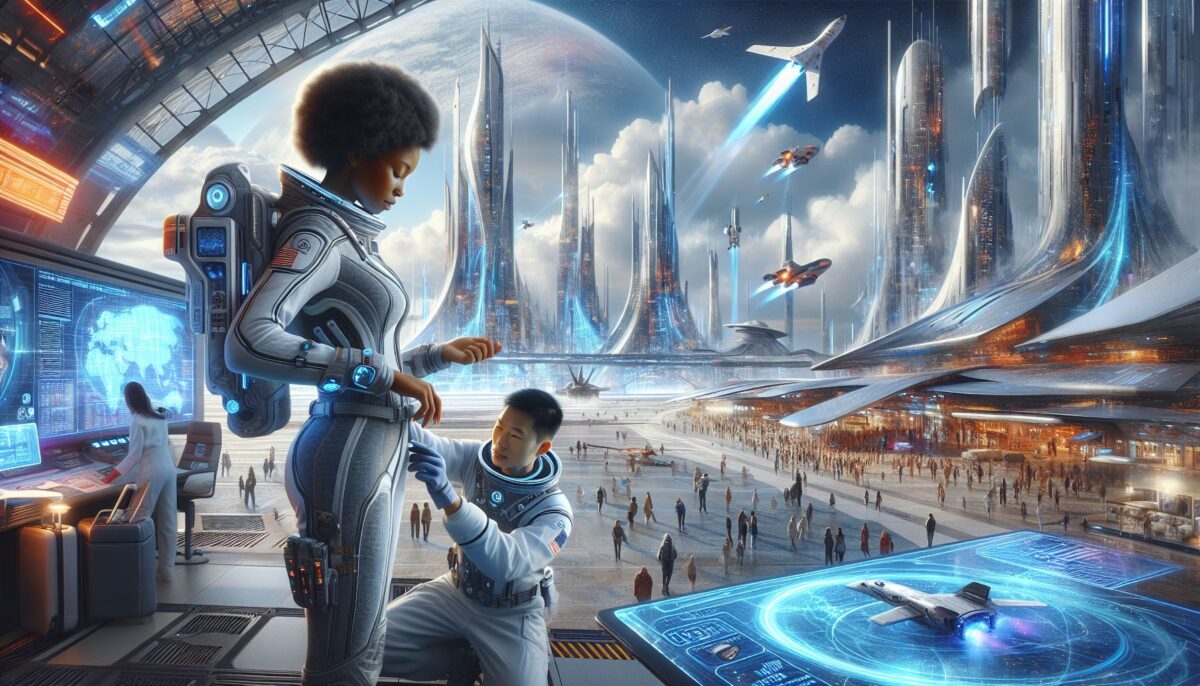
Hey fellow Earthlings! Strap in, because today’s post is about space travel, and honestly? It’s moving faster than I can keep up with. We’re living in a time where space isn’t just the final frontier anymore. It’s starting to look more like the next vacation spot for regular people like us. Wild, right? Let me walk you through how this whole thing might actually make us all space travelers sooner than we think.

From Sci-Fi to Almost-Reality

Remember when space travel was pure fantasy? I used to think we’d be waiting centuries for this stuff. Then companies like SpaceX and Blue Origin showed up and made it feel almost normal. They’re launching and relaunching rockets like it’s no big deal, tweaking designs with every flight.

I’m not ready to cancel my beach vacation for Mars just yet, but the timeline doesn’t seem crazy anymore. The game-changer here is reusability. SpaceX figured out how to land their rockets and use them again, which slashes costs. Blue Origin’s New Shepard takes people to the edge of space and brings them back in about ten minutes. Ten minutes! That’s shorter than most coffee shop lines.

Galactic Globetrotters: Not Just for Billionaires

Okay, let’s be real. It’s still expensive as hell. Virgin Galactic wants around $250,000 for a suborbital flight. That’s mortgage money for most of us. But here’s what gives me hope: technology gets cheaper over time. Those massive flat-screen TVs that cost $8,000 in 2003? You can grab one at Costco for $300 now.

NASA is opening up the International Space Station to private travelers, which means more competition. More companies fighting for customers usually means better prices for us regular folks. I’m betting that what costs a quarter-million today might be the price of a really nice European vacation in 15 years.

A New Kind of Economy

Here’s where it gets interesting. We’re not just talking about joyrides anymore. There’s a whole economy building up there. Companies are seriously planning to mine asteroids for precious metals. Others want to grow food in space. I know it sounds like science fiction, but so did smartphones 30 years ago.

Picture walking into your grocery store and seeing “space-grown tomatoes” in the produce section. Or buying jewelry made from asteroid platinum. It sounds ridiculous when I type it out, but part of me is already wondering what space vegetables would taste like. Probably expensive.

Deep-Space Dilemmas

But let’s not get carried away here. Space travel has some serious problems we need to figure out. Those rocket launches aren’t exactly eco-friendly. Each launch burns through tons of fuel and pumps out emissions. Plus, there’s already so much junk floating around up there that astronauts have to dodge debris regularly.

Then there’s what space does to human bodies. Extended time in zero gravity messes with your bones and muscles. NASA’s working on solutions, but I’m not thrilled about the idea of losing muscle mass just to see Earth from orbit. Some tradeoffs aren’t worth it.

The Future: Your Own Star Trek

So where does this leave us wannabe space tourists? I think we’re watching the beginning of something huge. Maybe not Star Trek huge, but definitely bigger than anything we’ve seen before. The idea of having friends who live on the moon sounds insane, but so did video calling your grandparents from across the world.

Right now, we’re in the experimental phase. Everything’s expensive and risky, but it’s happening. As the technology gets better and costs come down, space travel might become as normal as flying to another country. That’s the hope, anyway.

So keep watching the sky. I have a feeling we’re all going to be making those “one giant leap” jokes during our weekend trips sooner than we think.

Before I wrap up, I’m curious: if you could pick any destination in space, where would you go? I’m personally waiting for someone to open a coffee shop with a view of Earth. The Instagram photos alone would be worth it. Until next time, keep looking up.