Categories
Blog

The Exciting Future of Longevity: Unlocking the Secrets to Living Longer and Better

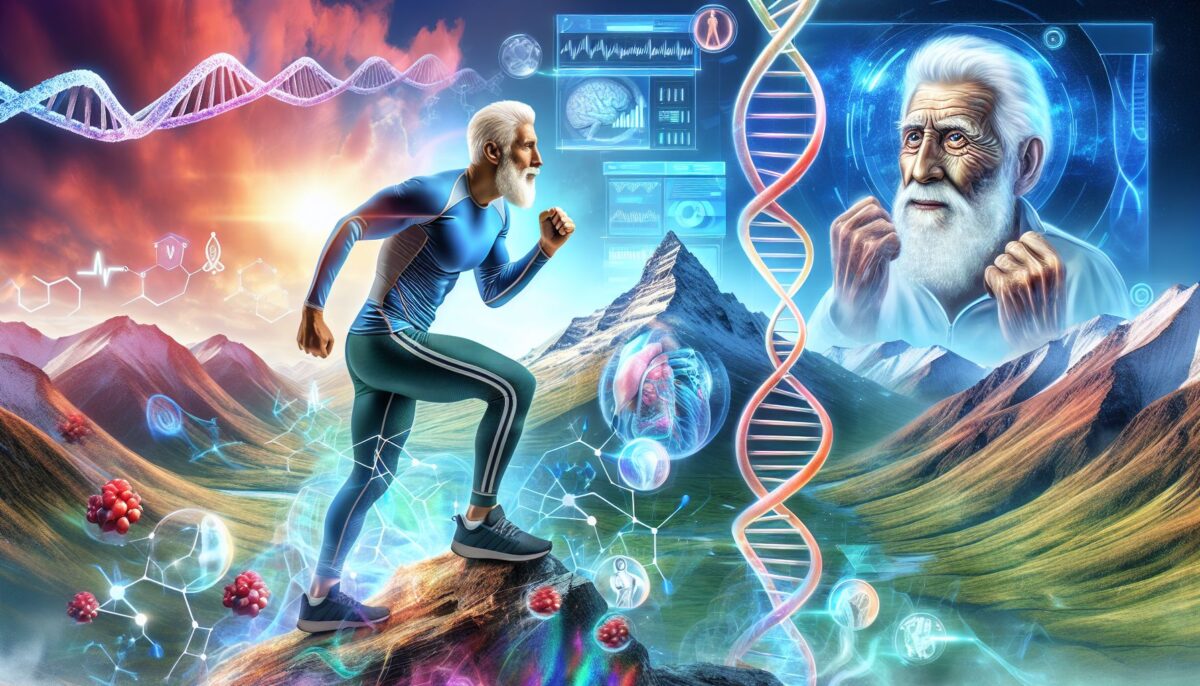
Hey, fellow tech enthusiasts! I want to dive into a fascinating subject that’s making waves in the tech and scientific communities—a topic that I, personally, have been obsessing over: longevity. Imagine a future where you not only live longer but also enjoy good health well into your golden years. Crazy, right? But thanks to emerging technologies and new research, this dream may be closer to reality than you think. So, grab a cup of coffee (or green tea if you’re already on the longevity wagon) and let’s explore what this brave new world has in store for us.

The Science Behind Longevity

Let’s cut right to the chase: why are scientists and tech companies laser-focused on extending human life? It’s not just about adding more years to the calendar but ensuring those extra years are quality ones. Yep, it’s about extending your healthspan—preventing the diseases and disorders that tend to tag along with aging. Research from organizations like the SENS Research Foundation and the Buck Institute for Research on Aging suggests that aging itself is a disease, and if we treat it as such, we could eradicate many age-related conditions.

Cellular Senescence: The Culprit?

Cellular senescence is a buzzword you might’ve stumbled upon while reading up on longevity. It’s the process where cells stop dividing and refuse to die. Sounds like a bad zombie flick, right? While senescence initially prevents cancer (yay!), these stubborn cells start releasing inflammatory signals, leading to tissue damage and, you guessed it, aging (boo!). Tech solutions like senolytics—drugs that can clear these zombie cells—are being developed to target these issues. Imagine a popup blocker, but for dysfunctional cells. Super cool!

The Role of Genetics

Ah, the age-old debate: nature vs. nurture. Genetics have long been seen as the main determinant of lifespan, but recent studies suggest that lifestyle choices play a big role too. CRISPR technology is being explored as a tool to tweak genes related to longevity. Think of it as editing the ultimate code of life to ensure a smoother-running program. Exciting times for geneticists, and honestly, exciting times for all of us!

Companies Leading the Longevity Charge

Now, who are the main players in this game of cellular Jenga? A bunch of innovative companies and rockstar names in the industry are diving headfirst into these uncharted waters.

Google’s Calico

When you’ve got a tech giant like Google backing a longevity lab named Calico (short for California Life Company), you can’t help but pay attention. Founded with the mission of combating aging and associated diseases, Calico is using data science, AI, and big data analytics to crack the code on human longevity. They’ve even partnered with AbbVie, a pharmaceutical company, to accelerate their research. The rest of us might still be counting our pennies, but with Google co-signing, Calico is in a financial position to make big strides.

Unity Biotechnology

Unity Biotechnology is another frontrunner in this domain, focusing on halting, slowing, or even reversing diseases of aging. Their approach is like issuing eviction notices to those pesky senescent zombie cells I mentioned earlier. Although they’ve faced setbacks (which, to be fair, is kind of the essence of innovation), they continue to pioneer treatments targeting age-related conditions like osteoarthritis and eye diseases.

Longevity in Everyday Life: What Can We Do Now?

Okay, so you’re pumped about the future, but what can you do today to add a few years to your life and keep sprightly while you’re at it? Here are some OMG-so-simple tips that have been shown to contribute to longevity:

Diet and Intermittent Fasting

The phrase “you are what you eat” has never been more accurate. The Mediterranean diet, rich in vegetables, fruits, and good fats, has been associated with longer life. And intermittent fasting, a.k.a. timing your meals to spike and rest your insulin, may mimic caloric restriction, a practice known to prolong life. So maybe skip that midnight snack after your online marathon of The Walking Dead.

The Magic of Movement

Everyone’s favorite word (said no one ever): exercise. But hold up, it doesn’t have to be grueling. Moderate physical activity—like brisk walking, swimming, or yoga—goes a long way in enhancing longevity. Plus, it boosts your mood. Double win!

Social Connections and Cognitive Health

There’s something to be said for maintaining meaningful relationships and engaging your brain in mentally stimulating activities. Lifelong learning and staying socially active keep those neurons firing and are strongly linked to longer life spans.

The Speculative Future: Utopian or Dystopian?

Here’s the juicy part—speculating about what this could mean for our future. I know, sounds all sci-fi and utopian, right? Imagine a future where aging is like a reversible trend, like bell-bottom jeans or mullets. But seriously, could these advancements solve pressing issues like overpopulation or resource allocation? Or might they amplify existing societal inequalities, creating a divide between those who can afford these miracles and those who can’t?

While it’s fascinating to hypothesize about utopian worlds where we’re all youthful centenarians, we should also consider ethical and social challenges. For now, the race is on to balance tech advances with accessibility, ethics, and overall human welfare.

Conclusion: Dreaming Big, Living Better

In closing, the path toward understanding and extending human life through technology is nothing short of exhilarating. Whether we reach island-like communities of spirited nonagenarians or discover new ethical dilemmas, what’s sure is that longevity science is full of surprises. While we shouldn’t expect to see the first 200-year-old human any time soon, tech innovation has certainly given us solid ground for optimism. Remember, folks, this isn’t just about adding years to life but adding life to years. So, until next time, keep dreaming big and living even bigger!

Feel free to share your thoughts, questions, or your best secrets to longevity in the comments below. I’m all ears—and frankly, just as curious as you are!
Categories
Blog

Embracing AI Artistry: Where Creativity Meets Code

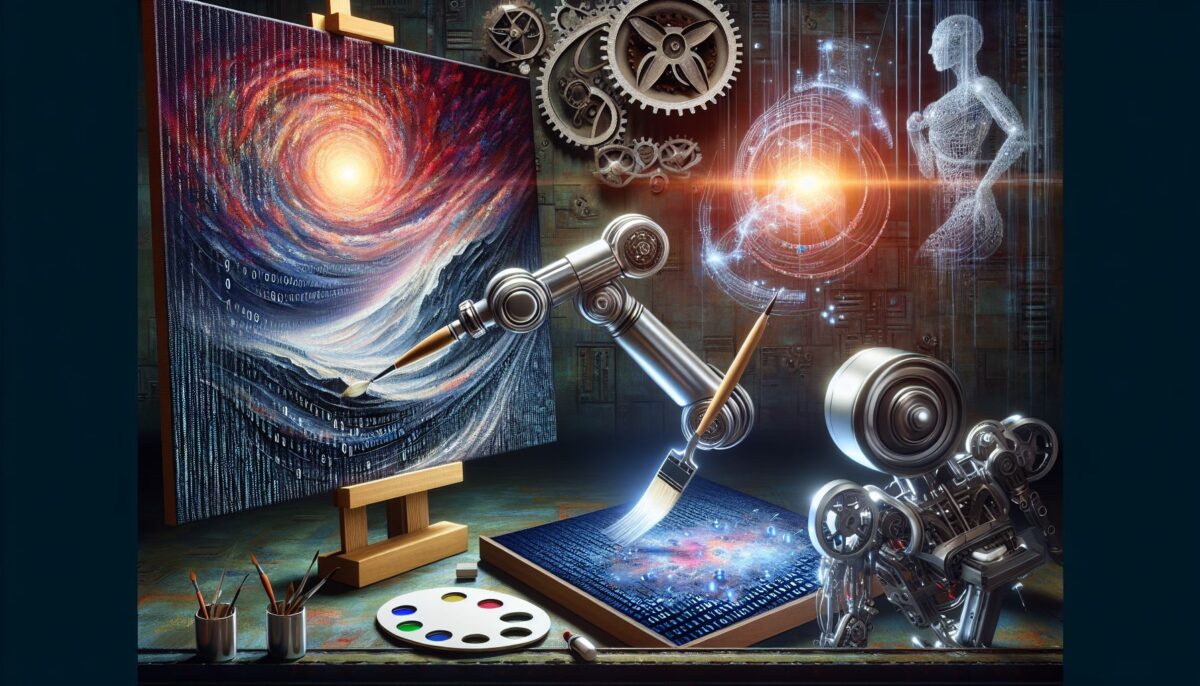
Welcome back, fellow tech enthusiasts, to another day of exploring our techno-utopian future. Today, we’re tackling a topic that’s been stirring up all kinds of conversations in my circles: AI in creative arts. You know, that weird space where artificial intelligence picks up a paintbrush or strums a guitar, blurring what used to be clear lines between technology and pure human inspiration.

Once Upon a Neural Network

Ah, computers and creativity. I remember not-so-fondly when my college creative writing classmates said art and tech would never mix, dismissively eyeing my laptop during poetry readings. (Side note: Think of my poetic magnum opus as “Code Whispers of the Binary Soul.”) Fast forward a decade, and I’ve found myself excitedly explaining to those very classmates how AI is changing everything from painting to poetry. Boy, does art class look different nowadays!

You might be wondering how exactly artificial intelligence fits into a creative studio. At its core, AI in creative arts uses deep learning models, neural networks, and computational creativity algorithms to create, innovate, and even predict human artistic outputs. Remember the hype about OpenAI’s DALL-E, capable of spitting out mind-blowing images from text descriptions? Or how about Jukedeck, which composes music based on algorithms (acquired by TikTok’s parent company ByteDance)? These aren’t just flash-in-the-pan novelties. They might actually change how we think about and make art.

The Algorithms Behind the Easel

Let’s peek under the hood of these incredible AI artists. To put it simply, a lot of the magic happens within neural networks trained on massive datasets. Millions upon millions of images, songs, and texts feed these algorithms, teaching machines what appeals to the human eye or ear, or at least getting close to it.

Remember when Google’s DeepDream turned photos into psychedelic nightmares (I mean, “masterpieces”)? It used convolutional neural networks (CNN) to recognize and enhance certain features. Imagine this on steroids, and you have the new generations of AI models trained not just to perceive art but to create it. GANs (Generative Adversarial Networks) are at the cutting edge, functioning as the dynamic duos of the AI world. One half creates images, the other critiques them. Talk about the ultimate artist-critic combo!

A Canvas of Possibilities

AI isn’t just making art. It’s reshaping the fundamental processes behind artistic creation. Consider the artist Mario Klingemann, a pioneer in AI-generated art. He creates beautiful, often surreal artwork with the help of neural networks. I’ve had the pleasure to chat with coders turned painters, who learned their color palettes through coding libraries rather than art catalogs. Then there’s the world of AI-written novels that challenge the norms of story structure, like “1 the Road” by Ross Goodwin, an AI-driven narrative on America’s highways.

Let’s not skip the fashion industry, where AI’s influence is running wild, predictively suggesting color palettes and patterns for the next season. I’m picturing a future where I let an AI select my daily wardrobe, unleashing the creatively expressive side my programmer tendencies might have missed.

Debating the Soul of the Artist

Of course, any leap in technology brings with it the requisite hand-wringing debates. Does a machine truly create art if it replicates patterns it’s learned from history? The purists argue AI lacks the conscious agency or emotional depth to “truly” create. Meanwhile, I can’t help but chuckle at the thought of humans gatekeeping creativity from their digital siblings. What if the art doesn’t even need an audience?

I’ve heard some describe AI as an endless intern with no sick days or lunch breaks. Cool but a bit unsettling. However, plenty of artists view AI as a collaborative partner, a muse even. Recently, at an NYC tech-art show, I met a digital sculptor who described her relationship with AI as “infinitely inspiring” and “endlessly surprising.” Is it perfect? Of course not. But were any masterpiece-rendering human artists flawless beings? Exactly.

Future Flow: AI and the Next Brushstroke

It’s wild to think where we are and where we’re heading with AI in the creative realm. My bold prediction? In a decade, we’ll see all kinds of AI collaborations: co-paintings with robots, bands mixing human and artificial beats in rhythmic harmony, and novels written by AI using machine logic to craft plot twists even we humans can’t predict.

These prospects come with real challenges: ethical concerns about originality, copyright issues, dependency on AI, and potential social displacement of artists. But let’s walk the line of possibility before reality catches up, shall we?

Wrapping it up, the world of AI-enhanced arts is wild, unpredictable, and genuinely exciting. Whether it’s breathing new life into classical forms or inventing unprecedented genres of artistic expression, we’re smack dab in the middle of a cultural tech renaissance. Here’s to whatever comes next, where every artist, human or machine, gets to splash their distinct color across the universal canvas.

Stay inspired and curious, my friends. Until next time!

Categories
Blog

Exploring the Singularity: The AI Revolution in Music Composition

Hey, fellow tech aficionados! Today, we’re talking about something that’s been on my mind lately: artificial intelligence in music composition. This tech has been brewing for a while, and I figured it was time to dig into how AI is changing the way we create and experience music. Pop in your AirPods, and let’s get into this digital symphony!

Tune Up: Setting the Stage for AI in Music

We’re living in pretty wild times when it comes to AI. This technology is exploring art forms in ways that seemed impossible just a few years ago, and music composition is right at the center of it all. Haven’t you ever wondered how AI manages to create melodies that actually evoke emotions, tell stories, and maybe even create the next chart-topper?

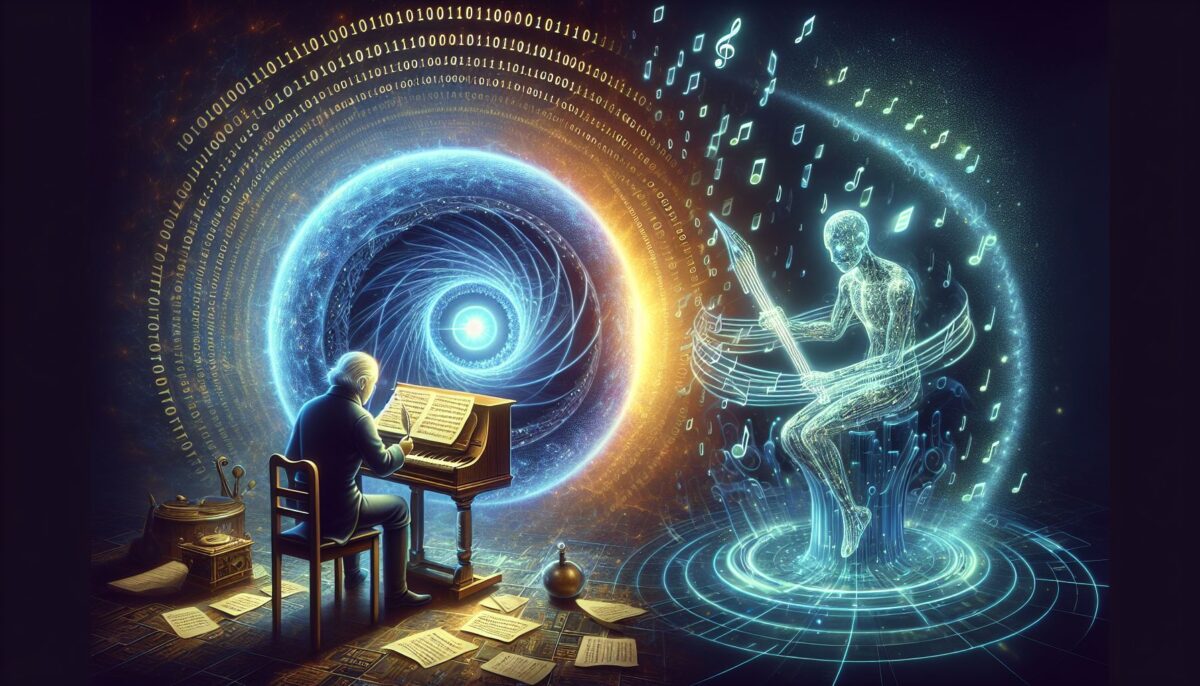
Let me paint you a picture of what’s been happening. Not so long ago, music creation was all about artists spending hours scribbling notes on staves, practicing scales until their fingers hurt, and drawing inspiration from their life experiences. Now AI shows up as this unexpected collaborator, reading data, spotting patterns, and even picking up on emotional nuances to create music. This mix of binary code and creative expression is where things get really interesting.

The Bytes Behind the Beats: How AI Crafts Music

1. Deep Learning and Neural Networks

The backbone of AI music composition is deep learning and neural networks. These systems chew through massive amounts of music (think Beethoven to Billie Eilish) and learn the distinctive features, styles, and structures. Like an eager music student, AI absorbs and analyzes everything, eventually developing the ability to generate its own unique compositions. Algorithms like recurrent neural networks (RNNs) and generative adversarial networks (GANs) are key players in this process, turning individual notes into cohesive pieces.

2. Data-Driven Creativity

Here’s what’s cool: AI doesn’t just copy existing music. It takes ideas and mashes them together to create something new. By processing data about everything from musical styles to what listeners actually want to hear, AI composers produce tracks that fit specific contexts, emotions, or themes. These compositions aren’t just rehashed versions of old songs. They bring fresh perspectives to familiar genres and sometimes create entirely new ones.

3. The Role of Natural Language Processing (NLP)

Text and lyrics are huge parts of most musical compositions. AI uses natural language processing to write lyrics that actually work with its musical creations. It looks at context, mood, and meaning, generating verses that match the vibe of the melody. We’re talking AI-driven lyrical creativity here that can remind you of your favorite songwriter’s work.

Charting New Territories: Implications and Opportunities

1. Democratizing Music Creation

One of the coolest things about AI in music is how it’s making music creation accessible to everyone. You don’t need to be Mozart or have access to a fancy recording studio to craft catchy tunes. All you need is curiosity, a computer, and the right AI software. This accessibility is letting more people express themselves musically, breaking down barriers of skill level, cost, and resources.

2. Collaborations and Innovations

Picture the best human composers working with AI to push the boundaries of musical genres. This isn’t just some future possibility. It’s happening right now. Artists are already exploring collaborative compositions with AI that create completely new soundscapes. It’s exciting territory for innovation, challenging and inspiring artists to rethink what music can be.

3. Transforming the Music Industry

AI isn’t just changing how music gets created. It’s also changing how it’s marketed and consumed. AI-driven analytics are reshaping the industry by predicting trends, identifying potential hits, and tailoring music to individual listener tastes. As playlists and soundtracks get curated with machine precision, the industry’s entire approach to consumer engagement has been flipped on its head.

Conducting the Future: Challenges and Ethical Considerations

1. Creativity vs. Originality

The big question everyone’s asking about AI music: is it really creative, or is it just really good at copying? People worry that AI-generated music might be derivative or missing the “soul” that human creation brings. While AI can definitely emulate known styles, truly radical originality still seems to come from the human touch. The challenge moving forward is making sure AI music composition adds to creative originality rather than replacing it.

2. Intellectual Property and Ownership

Here’s a legal mess waiting to happen: who owns an AI-generated composition? Is it the developer, the algorithm, or the human who programmed it? These questions don’t have clear answers yet in intellectual property law, and they’re creating some serious legal and ethical headaches. We need a transparent framework as we use AI for music creation to protect artist rights and encourage innovation.

3. Safeguarding Human Expression

The promise of AI music needs to be balanced with preserving the human element of expression. Music is powerful because it tells stories and reflects personal experiences. As AI takes on a bigger role, we have to make sure we’re maintaining authenticity and diverse representation in musical narratives.

Encore: The Future Soundtrack Awaits

Our dive into AI-driven music composition reflects the bigger transformation happening in art and creativity. This convergence of technology and creative expression promises an exciting future where we’re not just passive listeners but active participants in co-creating the soundtracks to our lives.

As we continue to explore these boundaries, it’s important to nurture this relationship between humans and machines. After all, the goal is to create a mix of music that celebrates the artistry of both, where the power of algorithms meets the soul of human expression.

So, that’s your overview of AI in music composition. What are your thoughts on the impact AI is having on music and creativity? Is it a shiny new instrument, or are there some warning signs we should pay attention to?

Play on, dear readers!