
The Trend That Captured 2.1 Billion Views (And Your Worry)
Your face feels puffy. You gained a few pounds. You’re tired more than usual. Then you see a TikTok creator explaining that your face is literally showing your cortisol levels—and suddenly, your symptoms have a name, a cause, and a solution you can buy.

The hashtag #cortisolface has amassed over 2.1 billion views on TikTok as of early 2026. That’s not a typo. Creators across the platform are building entire followings around the idea that puffiness, weight gain, acne, and fatigue are all visual signatures of chronically elevated cortisol. The message is consistent: your body is broken, your hormones are broken, and they have the supplement or wellness protocol that fixes it.
Here’s what we need to talk about: the view count doesn’t make the science true. And the science matters more than you might think.
What Doctors Actually Know About Real Cortisol Problems
Let’s start with the actual condition the internet is obsessing over: Cushing’s syndrome, which is genuine hypercortisolism. This is a real disease. It destroys bone density, causes severe muscle weakness, induces depression, and creates the facial puffiness everyone keeps filming. It’s also extraordinarily rare.
The Endocrine Society released a clinical statement in 2025 clarifying the numbers. True hypercortisolism affects 10 to 15 people per million annually. In the United States, that means approximately 3,300 to 5,000 people get diagnosed each year. To put it in perspective: you are more likely to be struck by lightning in your lifetime than to develop Cushing’s syndrome. Diagnosis requires blood tests, urine tests, imaging studies, and clinical evaluation by an endocrinologist—not a selfie assessment and a TikTok comment section consensus.
The problem is that the symptoms social media attributes to “cortisol face” are real. Puffiness exists. Weight gain happens. Fatigue is legitimate. But these symptoms have dozens of causes: thyroid dysfunction, sleep deprivation, dietary sodium intake, medications, hormonal cycles, actual stress, autoimmune conditions, and yes, sometimes genuinely elevated cortisol from diagnosable illness. The internet’s move is to skip the diagnostic work and assume the worst.
For detailed, physician-reviewed information about how cortisol actually functions in your body, The Endocrine Society Patient Resources on Cortisol breaks down the science without the sales pitch.
The Self-Diagnosis Epidemic Nobody Expected
A 2025 survey by the American Psychological Association found that 41 percent of Gen Z adults reported self-diagnosing a cortisol-related condition based on social media content. Let that number sit for a moment. Four out of every ten young adults have convinced themselves they have a hormone disorder they learned about on an app designed to keep them scrolling.
This isn’t a judgment. It’s a pattern. When you see thousands of people describing symptoms that overlap with your own experience, and they’re all pointing to one explanation, your brain does what it’s supposed to do: it looks for patterns, finds meaning, and says “Oh. That’s what’s wrong with me.”
The issue is that pattern-matching isn’t diagnosis. And diagnosis is the difference between targeted treatment and expensive placebo.
The American Psychological Association Stress in America 2025 research shows that while stress is genuinely affecting young adults’ health, the solution isn’t always a supplement. Sometimes it’s sleep. Sometimes it’s reducing actual stressors. Sometimes it’s therapy. But the internet wants to sell you ashwagandha.
The Supplement Boom Isn’t Based on What You Think It Is
Ashwagandha supplement sales in the United States grew 67 percent between 2024 and 2025, according to market data from SPINS. That’s explosive growth driven almost entirely by marketing claims that ashwagandha reduces cortisol and solves “cortisol face.”
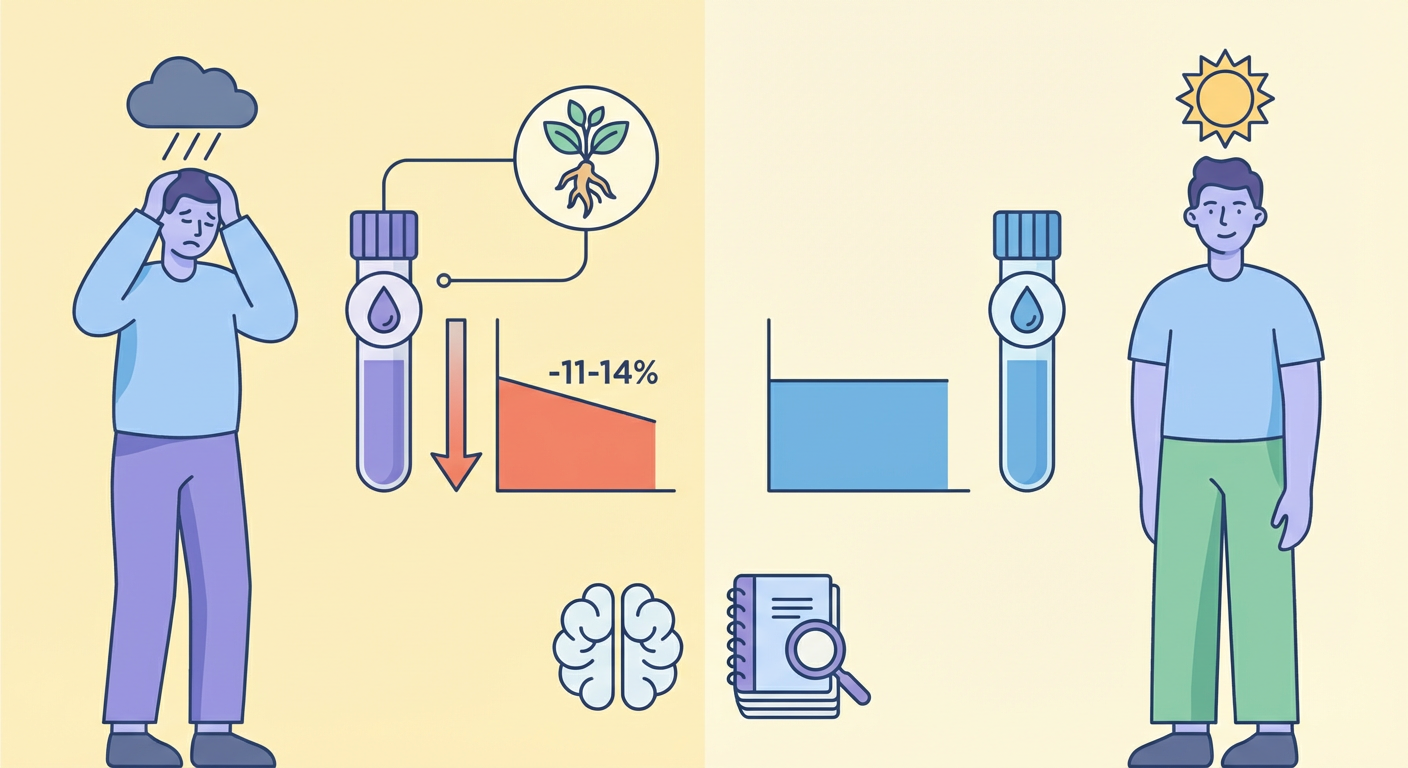
Here’s what the actual research says. A 2025 meta-analysis published in Psychoneuroendocrinology reviewed 28 studies on ashwagandha and cortisol. The results: the supplement produced statistically modest reductions in salivary cortisol, averaging 11 to 14 percent, but only in clinically stressed populations—people already diagnosed with stress-related conditions. In healthy individuals with baseline cortisol levels, ashwagandha showed no significant effect.
Translation: if you’re already dealing with clinical stress and you’re looking for an 11 to 14 percent reduction, ashwagandha might help. If you’re a healthy person who thinks your puffy face means you have a hormone disorder, a supplement won’t fix something that probably isn’t broken. And it might cost you $25 to $50 per bottle to find that out.
The real kicker? That 11 to 14 percent reduction is comparable to what you get from consistent sleep, regular movement, and actual stress reduction. Those cost nothing except intention.
What to Do When You’re Genuinely Concerned
If you’re experiencing unexplained weight gain, persistent fatigue, or facial puffiness that concerns you, don’t ignore it. Your body is communicating something. But don’t skip straight to self-diagnosis either.
Talk to your primary care doctor. Describe what you’re observing. Request basic blood work if it seems appropriate. Get your thyroid checked. Ask about your sleep quality. Discuss your actual stress levels and whether they’ve changed. Let someone with training and diagnostic tools do the assessment.
If your doctor suspects a cortisol-related condition, they’ll refer you to an endocrinologist. That person will order the right tests. You’ll get an actual answer instead of a TikTok answer. That answer might be “you’re fine” or “here’s what we found and here’s how we treat it.” Either way, you’ll know.
What won’t happen? Diagnosis by algorithm. Treatment by trend. Or paying for supplements that don’t address the real issue.
The numbers are real. Your symptoms are real. But the connection TikTok is drawing between them might not be. If you’re noticing changes in your body or your health, that’s worth investigating—just do it with someone qualified to actually investigate. What’s been your experience with health trends online? Have you found ways to distinguish between real information and marketing? I’d genuinely like to hear what’s worked for you.